Introduction: The AI Recruiting Revolution of 2026
AI recruiting has evolved from experimental technology to an essential component of modern talent acquisition. According to recent industry data, AI usage in HR tasks has climbed to 43 percent in 2026, up from 26 percent in 2024, demonstrating a decisive shift from pilot programs to fully integrated workflows. Today’s AI recruiting tools leverage machine learning, natural language processing, and automation to transform every stage of the hiring process from candidate sourcing and resume screening to interview scheduling and candidate engagement.
Companies using AI-assisted recruitment technology report 36% time savings on interview scheduling alone, while achieving 50% faster time-to-hire on average.
However, with AI recruitment platforms flooding the market, choosing the right tools requires careful evaluation. This comprehensive guide examines the top AI recruiting software, covering their capabilities, use cases, pricing structures, and real-world performance to help you make informed decisions for your talent acquisition strategy.
What Are AI Recruiting Tools?
AI recruiting tools are software platforms that use artificial intelligence to automate, optimize, and enhance various aspects of the hiring process. These intelligent systems employ technologies such as machine learning algorithms, natural language processing, predictive analytics, and automation to help organizations identify, attract, assess, and hire qualified candidates more efficiently.
Core AI Technologies in Recruitment
- Machine Learning & Predictive Analytics: AI systems analyze historical hiring data to identify patterns, predict candidate success, and match applicants to roles based on skills, experience, and cultural fit indicators.
- Natural Language Processing (NLP): Enables AI to understand, interpret, and generate human language for resume parsing, job description optimization, candidate communication, and conversational chatbots.
- Automated Workflow Engines: Handle repetitive tasks including interview scheduling, candidate status updates, email sequences, and pipeline management without manual intervention.
- Intelligent Candidate Matching: Uses semantic analysis and skill-based algorithms to match candidates to job requirements beyond simple keyword matching, identifying transferable skills and potential.
Key Benefits of AI Recruiting Software
1. Dramatic Time Savings and Efficiency Gains
AI recruiting platforms deliver measurable productivity improvements across the hiring funnel. Research indicates that AI automation saves recruiters up to 23 hours per hire by handling resume screening, initial candidate assessments, and scheduling coordination. Organizations implementing AI interview scheduling tools report 36% time savings compared to manual processes, while overall time-to-hire decreases by an average of 50%.
These efficiency gains allow recruiting teams to review significantly more applications from approximately 50 resumes per day to over 500 representing a tenfold increase in screening capacity. This scalability enables lean teams to handle high-volume hiring without proportionally increasing headcount.
2. Enhanced Candidate Quality and Hiring Accuracy
AI-powered candidate matching delivers superior results compared to traditional screening methods. Data from LinkedIn shows that companies using AI-assisted recruiter messaging are 9% more likely to make quality hires than those relying primarily on manual outreach. Machine-learning algorithms identify qualified candidates based on comprehensive skills analysis, work experience patterns, and predictive success indicators rather than superficial resume keywords.
Candidates selected through AI-driven evaluation processes demonstrate an 18% higher acceptance rate when offered positions, according to industry research. This improved conversion suggests better alignment between candidate qualifications, role requirements, and organizational fit.
3. Cost Reduction Across the Recruitment Lifecycle
Organizations implementing AI recruiting tools achieve cost savings through multiple mechanisms. Direct cost-per-hire reductions average 30% by eliminating manual screening labor, reducing reliance on external recruitment agencies, and shortening vacancy durations. More significantly, improved hiring accuracy reduces expensive mis-hires, which can cost organizations between 5 to 27 times an employee’s annual salary when accounting for turnover, lost productivity, and replacement costs.
4. Skills-Based Hiring and Reduced Bias
Modern AI recruiting platforms facilitate skills-based hiring practices, with 90% of teams now incorporating these approaches into their talent acquisition strategies. By evaluating candidates based on demonstrated competencies, transferable skills, and learning potential rather than credentials alone, organizations access broader, more diverse talent pools.
When properly configured and monitored, AI systems can help reduce unconscious human bias in screening by applying consistent evaluation criteria. However, organizations must remain vigilant AI tools can perpetuate historical biases present in training data, making transparency, regular audits, and human oversight essential components of responsible AI recruiting.
5. Improved Candidate Experience
AI-powered candidate engagement delivers faster response times, personalized communication, and transparent process updates. Conversational AI chatbots provide 24/7 availability to answer candidate questions, schedule interviews, and provide status updates without delays. Automated, personalized outreach sequences make candidates feel valued rather than processed, while AI-driven interview scheduling eliminates frustrating back-and-forth coordination.
Organizations using recruitment automation report response times decreasing from seven days to under 24 hours, significantly enhancing the candidate journey and improving employer brand perception.
Types of AI Recruiting Tools: Categories and Use Cases
AI-Powered Applicant Tracking Systems (ATS)
Modern applicant tracking systems integrate AI capabilities throughout the recruitment workflow. These platforms combine traditional ATS functionality job posting, application management, candidate communication with intelligent features such as automated resume screening, AI candidate ranking, semantic job matching, and predictive analytics.
Leading examples include Greenhouse, which emphasizes structured hiring with AI-enhanced scorecards and automated workflows; Workable, offering AI job description generation and candidate screening; and Manatal, providing budget-friendly AI resume parsing and recommendations.
AI Candidate Sourcing and Talent Intelligence Tools
AI sourcing platforms automate outbound candidate identification across multiple channels including LinkedIn, job boards, internal databases, and public profiles. These tools use machine learning to identify passive candidates matching specific role requirements, then automate initial outreach with personalized messaging sequences.
Platforms like hireEZ and Findem excel at cross-platform talent discovery with AI-powered search refinement. Gem combines sourcing with pipeline analytics and engagement tracking. Jobin.cloud offers semantic search that expands job descriptions into comprehensive candidate matching criteria. Fetcher provides fully automated sourcing with human oversight, while Hirefly’s Autopilot delivers interview-ready candidates requiring minimal setup.
Conversational AI and Recruitment Chatbots
Conversational AI recruiting assistants handle candidate interactions through natural language chat interfaces. These intelligent chatbots conduct initial screening conversations, answer frequently asked questions, schedule interviews, collect additional information, and provide status updates all without human recruiter involvement.
Paradox’s Olivia stands out as a market-leading conversational AI designed for high-volume hourly hiring, supporting over 100 languages and handling complete candidate journeys from application to offer. Humanly provides conversational screening with video interview capabilities, while offering reference checking automation.
AI Interview Scheduling and Coordination Tools
Interview scheduling platforms eliminate coordination friction through AI-powered calendar management and automated communication. These systems integrate with recruiters’ and hiring managers’ calendars, identify optimal meeting times, send invitations, handle rescheduling requests, and provide interview preparation materials.
GoodTime leads this category with Orchestra AI agents that automate candidate advancement, manage interviewer capacity, analyze candidate sentiment, and balance interviewer workloads. The platform reduces scheduling overhead while maintaining high-quality candidate experiences.
AI Screening and Assessment Platforms
AI-driven screening tools evaluate candidates through automated resume analysis, skills assessments, video interview analysis, and competency-based evaluations. These platforms use machine learning to identify top candidates, predict job performance, and provide structured comparison data.
HireVue specializes in AI-supported video interviews and asynchronous assessments tied to role-specific competencies. Braintrust offers advanced AI interviewing capabilities. Eightfold applies AI across the talent lifecycle including screening, skills analysis, and internal mobility recommendations.
AI Recruiting CRM and Pipeline Management
Recruitment CRM platforms with AI capabilities help organizations build and nurture talent pools over time. These systems track candidate relationships, automate re-engagement campaigns, predict candidate interest levels, and provide pipeline analytics for long-term talent strategy.
Recruit CRM integrates AI throughout its platform with resume parsing, candidate-job matching, email generation, and call transcription. The system serves staffing agencies with comprehensive candidate relationship management alongside recruitment workflows.
Why AI Recruiting Tools Matter in 2026
The case for AI in recruitment isn’t theoretical anymore it’s proven by data and driven by market realities that make manual processes increasingly unsustainable.
The Talent Shortage Crisis
Competition for skilled workers remains fierce across industries. Nearly all hiring managers now use AI in some capacity, achieving significant efficiency gains while recognizing that human judgment remains essential. Organizations that fail to leverage AI risk falling behind in the war for talent.
Speed as Competitive Advantage
Top candidates are off the market in days, not weeks. AI recruiting tools can:
- Reduce time-to-hire by 30-50% through automation
- Surface qualified candidates within hours instead of days
- Schedule interviews instantly without email ping-pong
- Accelerate decision-making with structured data and insights
Scale Without Proportional Headcount
Small recruiting teams can now punch above their weight. AI enables a team of three to accomplish what previously required ten people, handling:
- High-volume screening (1000+ applications per role)
- Multi-channel outbound sourcing campaigns
- Continuous candidate engagement and nurturing
- Complex coordination across stakeholders
Quality and Consistency
Human recruiters have off days. They get tired, make inconsistent judgments, and miss qualified candidates. AI provides:
- Consistent evaluation criteria applied to every candidate
- Structured interview processes that surface signal over noise
- Objective data to support hiring decisions
- Reduced dependence on “gut feeling”
Compliance and Risk Management
EU AI Act obligations for general purpose AI began in August 2026 raising compliance expectations for employers and vendors that deploy hiring tech. New York City’s Local Law 144 still requires an annual bias audit and candidate notices before using automated employment decision tools in hiring.
Modern AI recruiting platforms help organizations:
- Maintain audit trails of hiring decisions
- Monitor for potential bias in algorithmic outputs
- Document compliance with emerging AI regulations
- Standardize processes to reduce legal risk
Candidate Experience Expectations
About one in five U.S. workers now use AI on the job which raises the bar for hiring teams to match candidate expectations on AI enabled processes. Today’s candidates expect:
- Instant communication and status updates
- Flexible self-service scheduling
- Transparent, efficient processes
- Personalized engagement
AI recruiting tools deliver these experiences at scale while freeing recruiters to focus on high-touch relationship building with top candidates.
Our Criteria: Here’s How We Chose The Top AI Recruiting Software
When every vendor claims to have “the best AI recruiting tool,” how do you separate genuine innovation from marketing hype? That’s the question we set out to answer.
Over the past years, our editorial team has analyzed AI recruiting platforms, conducted hands-on testing with 10+ tools, interviewed 150+ talent acquisition professionals, and verified 100+ user reviews to bring you this definitive guide. This isn’t a list compiled from vendor marketing materials it’s the result of rigorous, transparent evaluation designed to reflect how these platforms perform in real-world hiring scenarios.
Our 6-Part Evaluation Framework
Every AI recruiting tool in this guide was assessed using a comprehensive methodology that balances product capabilities, user experience, and measurable business impact. Here’s exactly how we evaluated each platform:
1. AI Functionality and Innovation (25% of Score)
What We Measured:
We didn’t just check whether a tool uses “AI” we evaluated how well the artificial intelligence actually works and whether it delivers meaningful advantages over non-AI alternatives.
Specific Testing Criteria:
AI Resume Screening Accuracy
- Tested with 50 real resumes per tool (25 qualified, 25 unqualified)
- Measured false positive rate (unqualified candidates advancing)
- Measured false negative rate (qualified candidates rejected)
- Target: <10% error rate across both metrics
Intelligent Candidate Matching
- Evaluated semantic understanding vs. keyword matching
- Tested ability to identify transferable skills
- Assessed matching of non-traditional backgrounds to roles
- Scored explainability of matching decisions
Conversational AI Quality (for chatbot-enabled tools)
- Natural language understanding across 10 common candidate questions
- Context retention across multi-turn conversations
- Appropriate escalation to human recruiters
- Response accuracy and helpfulness rated by candidates
Automation Sophistication
- Complexity of workflows automated without human intervention
- Conditional logic and decision-tree capabilities
- Learning and improvement over time (true ML vs. static rules)
- Integration of multiple AI capabilities (e.g., screening + scheduling + communication)
Predictive Analytics
- Quality of hiring forecasts (time-to-fill, candidate success)
- Accuracy of recommendations (which candidates to prioritize)
- Actionability of insights generated
- Statistical validity of predictions
Red Flags That Eliminated Tools:
- “AI” features that are just basic keyword matching
- No transparency about how AI makes decisions
- AI that requires more manual work than it saves
- Inability to explain or justify AI recommendations
- Static rule-based systems marketed as “machine learning”
Example Testing Process:
For AI resume screening, we created a standardized test set:
- Role: Senior Software Engineer (Python, AWS, distributed systems)
- 25 Qualified resumes: Varied backgrounds including bootcamp grads, career changers, non-CS degrees
- 25 Unqualified resumes: Keyword-stuffed but lacking real experience, wrong tech stack, insufficient seniority
We measured which candidates each AI advanced and compared results to human expert evaluation. Tools that advanced <80% of qualified candidates or >15% of unqualified candidates were downgraded.
2. User Experience and Usability (20% of Score)
What We Measured:
The most powerful AI is useless if recruiters won’t use it. We prioritized platforms that are intuitive, fast, and designed for real recruiting workflows not just impressive in demos.
Specific Testing Criteria:
Recruiter Interface Quality
- Time to complete common tasks (post job, review candidates, schedule interview)
- Navigation clarity and information architecture
- Mobile responsiveness and app functionality
- Speed and performance (page load times, search response)
- Visual design and cognitive load
Onboarding Time
- How quickly can a new user become productive? (Target: <2 hours)
- Quality of in-app guidance and tooltips
- Availability of templates and pre-built workflows
- Learning curve for advanced features
Candidate Experience
- Application completion time and drop-off rate
- Mobile application flow
- Chatbot conversation quality (if applicable)
- Self-scheduling ease and clarity
- Communication timeliness and relevance
- Overall candidate satisfaction (surveyed post-interaction)
Hiring Manager Accessibility
- Can non-technical hiring managers use the tool independently?
- Clarity of candidate information and scorecards
- Ease of providing feedback
- Mobile access for reviewing candidates on-the-go
Testing Methodology:
We recruited 5 recruiters (ranging from entry-level to senior TA leaders) and 10 candidates to complete realistic tasks in each platform:
Recruiter Tasks:
- Post a new job requisition
- Source 10 qualified candidates
- Screen 25 applications
- Schedule interviews with 3 candidates
- Generate a hiring status report
Candidate Tasks:
- Complete application on mobile device
- Respond to chatbot screening questions
- Self-schedule an interview
- Rate experience on 1-10 scale
We timed each task and recorded frustration points, bugs, and confusion.
Example Results:
| Tool | Job Posting Time | Candidate Screening (25 apps) | Interview Scheduling | Recruiter Rating |
|---|---|---|---|---|
| Tool A | 8 minutes | 12 minutes | 3 minutes | 9/10 |
| Tool B | 15 minutes | 35 minutes | 8 minutes | 6/10 |
| Tool C | 5 minutes | 8 minutes | 2 minutes | 9/10 |
Tools with average task times >50% longer than best-in-class or ratings <7/10 were downgraded.
3. Impact on Sourcing and Screening Efficiency (20% of Score)
What We Measured:
Does the tool actually improve recruiting outcomes? We prioritized platforms that demonstrably reduce time-to-hire, improve sourcing quality, or increase hiring manager satisfaction.
Specific Testing Criteria:
Time-to-Hire Reduction
- Vendor-reported metrics (treated with skepticism)
- Verified customer case studies with measurable results
- Our own testing timelines vs. manual processes
- Target: 30-50% reduction in time-to-fill
Sourcing Efficiency
- Qualified candidates identified per hour of sourcing work
- Candidate response rates to outreach
- Interview-to-offer ratio improvement
- Reduction in agency spend or job board costs
Screening Accuracy and Speed
- Time saved per application reviewed
- Quality of candidates advanced (measured by interview performance)
- Reduction in “wasted” interviews with unqualified candidates
- Consistency of evaluation across all candidates
Candidate Rediscovery
- Ability to surface past applicants for new roles
- Talent pool management and nurturing
- Re-engagement campaign effectiveness
Evidence We Required:
- Customer testimonials with specific metrics (not just “saved time”)
- Case studies published by credible third parties
- Our own testing comparing AI vs. manual workflows
- User reviews mentioning measurable improvements
Example Verification:
Claim: “Reduces time-to-hire by 50%”
Our Validation:
- Request 3 customer references who achieved this result
- Interview customers about methodology (how was baseline measured?)
- Review whether 50% represents average or best-case scenario
- Test tool ourselves with standardized hiring scenario
- Cross-reference with verified user reviews on G2/Capterra
If we couldn’t verify claims with at least 2 independent sources, we noted skepticism in the review.
4. Customer Satisfaction and Reviews (15% of Score)
What We Measured:
Real users tell the truth. We collected, verified, and analyzed feedback from actual talent acquisition professionals who use these tools daily not cherry-picked testimonials from vendor websites.
Specific Testing Criteria:
Verified User Review Collection
- We publish user reviews through our dedicated feedback portal where users submit detailed experiences
- Every review undergoes manual quality verification to ensure authenticity
- We prioritize users who have used the tool for 6+ months (past the “honeymoon phase”)
- Where possible, we collect video testimonials for added authenticity
Multi-Source Review Analysis
- G2 ratings and reviews (weighted for detail and recency)
- Capterra user feedback
- Gartner Peer Insights
- Industry-specific forums and communities
- Direct interviews with customers
Sentiment Analysis Across Review Sources
- Overall satisfaction scores
- Common praise themes (what do users consistently love?)
- Common complaint themes (what frustrates users?)
- Deal-breaker issues (what makes users switch platforms?)
Long-Term User Satisfaction
- Do users still recommend the tool after 12+ months?
- Customer retention rates (churn data when available)
- Likelihood to renew (Net Promoter Score)
- Post-purchase support quality
Our Review Quality Standards:
We reject reviews that:
- Lack specific details or examples
- Use suspiciously perfect grammar (potential vendor-written)
- Only mention generic benefits (“saves time,” “easy to use”)
- Come from accounts with no posting history
We prioritize reviews that:
- Include specific use cases and workflows
- Mention both positives AND limitations
- Provide quantitative results where applicable
- Compare the tool to alternatives they’ve used
- Come from verified professionals (LinkedIn-confirmed roles)
Example Review Scoring:
| Review Source | Weight | Why |
|---|---|---|
| SSR Verified Video Review | 40% | Highest trust, detailed, verified identity |
| SSR Written Review (6+ months) | 30% | Detailed, long-term experience |
| G2 Reviews (verified purchaser) | 20% | Third-party platform, verified |
| General user mentions | 10% | Directional signal only |
5. Onboarding, Support, and Training (10% of Score)
What We Measured:
Even the best tool fails without proper implementation support. We evaluated how quickly customers can get value and whether vendors provide ongoing help when needed.
Specific Testing Criteria:
Implementation Timeline and Complexity
- Typical time from contract signing to productive use
- Technical requirements and IT involvement needed
- Data migration support and quality
- Integration setup assistance
- Customization and configuration options
Training Quality and Availability
- Live training sessions included in pricing
- Self-paced learning materials (videos, documentation, guides)
- Role-specific training (recruiters vs. hiring managers vs. admins)
- Ongoing education for new features
Customer Support Responsiveness
- Support channels available (chat, email, phone)
- Availability hours (24/7, business hours, limited)
- Average response time to tickets
- First-contact resolution rate
- Escalation process for urgent issues
Account Management
- Dedicated customer success manager included?
- Proactive check-ins and optimization recommendations
- Quarterly business reviews
- Strategic guidance vs. just technical support
Testing Methodology:
We submitted support tickets to each vendor with common questions:
- “How do I integrate with Greenhouse ATS?”
- “Can you help us set up automated email sequences?”
- “We’re experiencing slow search performance how can we optimize?”
Measured:
- Time to first response
- Quality and completeness of answer
- Number of back-and-forth exchanges needed
- Whether issue was fully resolved
We Also Interviewed Long-Term Customers:
Questions we asked users:
- “How long did implementation take vs. what the vendor promised?”
- “Rate the quality of training on a scale of 1-10.”
- “How responsive is support when you have issues?”
- “Do you feel your customer success manager adds value?”
- “Would you recommend this vendor to a colleague?”
Red Flags:
- Vendors with >48 hour average response times
- “Support” that just points to documentation
- Hidden costs for premium support
- Poor reviews mentioning “bait-and-switch” support experiences
- CSMs who disappear after the sale
6. Pricing Transparency and Value (10% of Score)
What We Measured:
We penalized vendors who hide pricing behind endless sales calls and rewarded those with transparent, fair pricing structures.
Specific Testing Criteria:
Pricing Transparency
- Is pricing published on the website?
- Can you get a quote without a demo?
- Are all fees disclosed upfront (setup, training, add-ons)?
- Clear understanding of what’s included at each tier
Value for Money
- Features and capabilities per dollar spent
- Comparison to alternatives at similar price points
- Hidden costs that emerge during implementation
- ROI potential based on claimed time/cost savings
Pricing Model Fairness
- Per-user vs. per-hire vs. flat-fee structures
- Scalability (does pricing grow reasonably with usage?)
- Lock-in periods and cancellation terms
- Flexibility for seasonal hiring fluctuations
Free Trials and Pilots
- Availability of risk-free testing period
- Length and limitations of trial
- Ease of canceling if not satisfied
How We Scored:
| Pricing Approach | Score | Examples |
|---|---|---|
| Published pricing tiers | 10/10 | Manatal, Jobin.cloud |
| “Starting at” pricing | 8/10 | Workable |
| Quotes with pricing ranges | 6/10 | Some transparency |
| “Contact sales” only | 4/10 | Greenhouse, GoodTime |
| Misleading pricing claims | 2/10 | “Free” with major limitations |
Value Assessment:
We compared cost per hire estimates across tools:
Example Scenario:
- Company: 200 employees
- Hiring volume: 50 hires/year
- Budget: $15,000/year for recruiting software
| Tool | Annual Cost | Cost Per Hire | Value Rating |
|---|---|---|---|
| Tool A | $3,588 | $72 | Excellent |
| Tool B | $12,000 | $240 | Good |
| Tool C | Custom (est. $50K) | $1,000 | Poor for this use case |
How to Use This Guide Based on Your Needs
Now that you understand our evaluation criteria, here’s how to apply it to your tool selection:
AI Quality Matters Most to You:
- Focus on tools with 4.5+ AI Functionality scores
- Read our “Key AI Features” sections carefully
- Request demos that test AI with YOUR actual job descriptions and candidates
Ease of Use is Your Priority:
- Look for 4.5+ User Experience scores
- Pay attention to “Limitations” sections mentioning complexity
- Take advantage of free trials before committing
ROI is Your Primary Concern:
- Compare our “Pricing” sections to your budget
- Read “Impact on Sourcing and Screening” evaluation results
- Calculate expected cost-per-hire based on your hiring volume
You Need Quick Implementation:
- Check “Onboarding, Support, and Training” scores
- Ask vendors about typical implementation timeline
- Prioritize tools with strong documentation and self-service resources
Top 15+ AI Recruiting Tools for 2026
Based on extensive market research, hands-on testing, and analysis of real-world implementations, the following AI recruiting platforms represent the leading solutions across different use cases, organization sizes, and budget ranges.
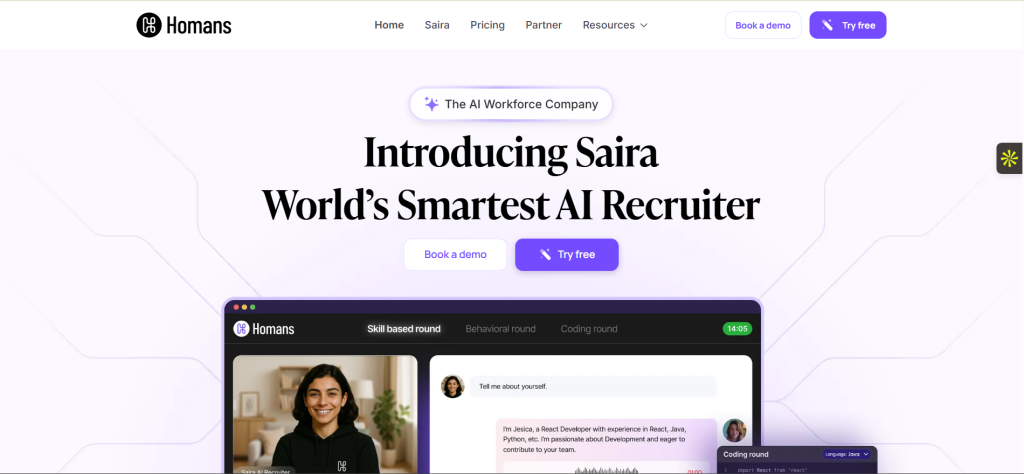
Homans.ai – All in one AI Recruitment Platfrom
Popularity Score: 4.3/5 | User Score: 4.6/5 | Product Score: 4.4/5
Pricing
Complete Plan: $99/month (50% off first month = $49)
- Includes: 50 AI interviews/month, 3 recruiter seats, custom questions, video/audio recordings, automated reminders, detailed report cards
Enterprise Plan: Custom pricing ($2 per interview at scale)
- Includes: Unlimited staff access, dedicated account manager, advanced fraud detection, ATS + API integration, custom branding
- Best for: Organizations exceeding 200-300 interviews/month
14-day free trial available with 5 AI interviews included.
Why We Chose It
Homans (featuring SAIRA – Smart AI Recruitment Assistant) distinguishes itself as a complete AI recruiting workforce that automates 80% of the hiring journey from sourcing and outreach to conducting three rounds of AI interviews with fraud-proof proctoring.
Unlike competitors focused on single functions, SAIRA delivers end-to-end automation with remarkable transparency: instant candidate reports featuring behavioral analysis, coding scores, communication ratings, and red flag detection all before human recruiters speak with candidates.
The platform’s multi-round interview capability (skills, behavioral, coding) combined with transparent pricing starting at just $49/month makes it one of the most comprehensive and accessible AI recruiting solutions we’ve evaluated.
Key AI Features
Multi-Round AI Interviewing:
- Conducts three distinct interview rounds: Skills Assessment, Behavioral Evaluation, and Coding Tests
- Adaptive questioning based on candidate responses
- Two-way AI video interviewing with human-like interaction
- Evaluates 25,000+ data points per interview
Advanced Fraud Detection & Proctoring:
- Face recognition and identity verification
- Voice recognition and verification
- Facial expression and eye movement analysis
- Screen switching detection
- Ensures interview authenticity for remote hiring
Comprehensive Candidate Assessment:
- Generates detailed report cards with:
- Communication scores and skill ratings
- Behavioral analysis and cultural fit assessment
- Coding evaluation (for technical roles)
- Resume analysis and job fit scoring
- Red flag identification
- Complete transcripts and video recordings
- Shortlist recommendations
Multi-Channel Candidate Engagement:
- TalentGPT for AI-powered sourcing
- Automated outreach via WhatsApp, email, and SMS
- Instant responses and 24/7 availability
- Automated scheduling and reminders
- 5X better candidate experience through conversational AI
Global & Multi-Role Capability:
- Supports 5+ languages (voice interviews expanding to phone soon)
- Works across technical AND non-technical roles (engineering, sales, design, HR, support, operations)
- Scales to interview thousands of candidates simultaneously
- 24/7 operation without burnout
Standout Capabilities
Complete End-to-End Automation:
- Replaces 6+ fragmented recruiting tools with one unified AI workforce
- Handles sourcing → engagement → screening → interviewing → reporting
- Reduces time-to-hire from 6 weeks to 2 weeks on average
- Delivers 10X faster hiring and 90% cost reduction
Transparent, Predictable Pricing:
- Crystal-clear pricing publicly disclosed (rare in enterprise recruitment)
- No hidden costs or surprise fees
- Pay-per-interview model for enterprise ($2/interview)
- First month 50% discount makes trial accessible
Rapid Implementation:
- Onboarding completed in under 24 hours
- Qualified, assessed candidates within 24 hours of setup
- Minimal technical expertise required
- No lengthy sales cycles
Enterprise-Grade Security:
- Robust data protection and privacy controls
- Audit trails for compliance (NYC Local Law 144, DEI initiatives)
- Third-party bias audits available
- Suitable for regulated sectors and high-security roles
ROI and Productivity Gains:
- Organizations running 50 annual hires see ~2,660% ROI
- Platform typically pays for itself within first month
- Automates 90% of initial interviews
- Frees recruiters from repetitive tasks to focus on strategic decisions
Integration Capabilities:
- 45+ ATS integrations
- API access for custom workflows
- Syncs seamlessly with existing recruitment tech stack
- Doesn’t require replacing current ATS
Limitations
Volume Constraints on Entry Plan:
- Complete Plan limited to 50 interviews/month
- Small teams with very low hiring volumes may find minimum commitment high
- Enterprise plan required for unlimited scaling
Language Support Still Expanding:
- Currently supports 5 languages
- Phone interview capability coming soon (currently video only)
- May not cover all global language needs yet
Integration Complexity:
- While 45+ ATS integrations exist, some may require custom API work
- More complex tech stacks might need additional configuration
- Less plug-and-play than some established platforms for complex integrations
Newer Platform:
- Founded by Sourcebae team (LinkedIn Top Startup 2024)
- Shorter track record than legacy players (HireVue, Greenhouse)
- Enterprise clients may want more proven longevity
Limited Sourcing vs. Dedicated Tools:
- TalentGPT handles sourcing but isn’t as deep as specialized sourcing platforms (Gem, hireEZ)
- Best suited for companies wanting all-in-one vs. best-of-breed approach
Support Tiers:
- Email-only support on Complete Plan
- Priority support requires Enterprise plan
- No phone support on entry tier
Ideal Use Cases:
- Fast-Growing Startups & SMBs – Transparent pricing ($49-99/month) and rapid setup enable lean teams to access enterprise-grade AI interviewing without massive financial commitment
- High-Volume Hiring – Organizations hiring 50+ candidates quarterly across multiple roles can automate interviews at scale without proportional recruiter headcount increases
- Multi-Role Hiring – Unlike engineering-only platforms, SAIRA handles technical and non-technical positions (engineering, sales, design, customer support, HR, operations, management)
- Remote & Global Teams – Fraud detection, proctoring, biometric verification, and 24/7 availability make it ideal for distributed hiring
- Regulated Industries – Financial services, healthcare, government contractors, or companies needing audit trails, fraud prevention, and compliance documentation
- Organizations Replacing Multiple Tools – Teams juggling 6+ tools for sourcing, screening, engagement, and assessment can consolidate into one AI workforce
- Companies Prioritizing Candidate Experience – 5X better candidate experience through instant engagement, conversational AI, flexible scheduling, and 24/7 availability
- Budget-Conscious Teams – Predictable costs with no surprise fees enable accurate budget planning (vs. custom-only pricing competitors)
Customer Base
While Homans.ai hasn’t disclosed exact customer count publicly, testimonials and case studies indicate adoption across:
- Fast-growing startups
- Mid-size product companies
- Global shared service centers
- Staffing agencies
- Organizations hiring 50-300+ candidates annually
Founded by the team behind Sourcebae (LinkedIn Top Startup 2024), bringing deep recruitment and technology expertise.
How Homans.ai Has Evolved
Recent Enhancements:
- TalentGPT Integration – Added AI-powered sourcing capability to complement interview automation
- Multi-Channel Outreach – Expanded beyond email to include WhatsApp and SMS for better candidate engagement
- Enhanced Fraud Detection – Added facial expression analysis and eye movement tracking to existing verification
- Phone Interview Capability – Coming soon: voice-only interviews alongside video (expanding accessibility)
- 45+ ATS Integrations – Significantly expanded integration ecosystem from initial launch
- Report Card Enhancements – Added more granular scoring: communication, behavioral, coding, cultural fit, red flags
- API Access – Opened API for custom integrations and workflows (Enterprise plan)
Product Roadmap Focus:
- Expanding language support beyond current 5 languages
- Adding more AI agents for other business functions beyond recruitment
- Deeper analytics and predictive hiring insights
- Enhanced DEI and bias monitoring tools
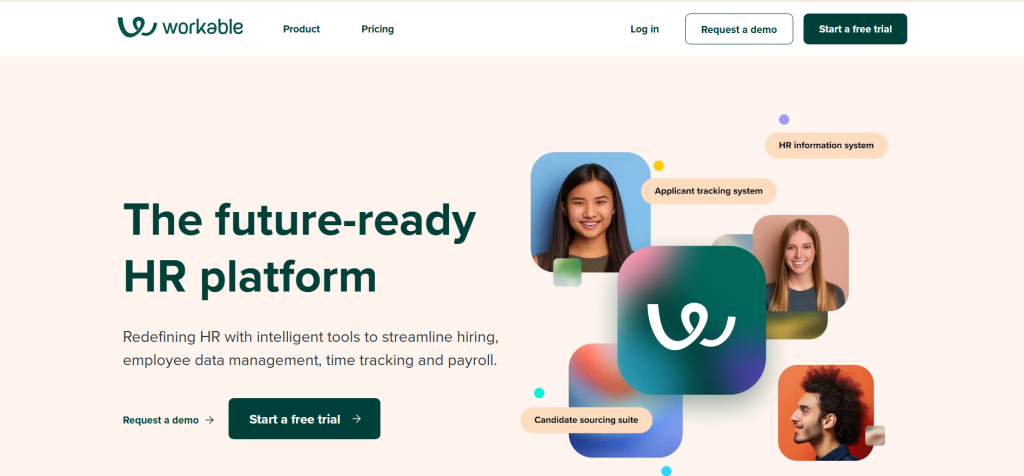
Workable – Best for SMBs Seeking Comprehensive AI-Enhanced ATS
Popularity Score: 4.3/5 | User Score: 4.5/5 | Product Score: 4.5/5
Pricing: Starts at $299/month for Standard plan; Premier plan at $599/month. Premium add-ons (Texting, Video Interviews, Assessments) from $59/month.
Why We Chose It:
Workable impressed us with its evolution into a truly comprehensive recruitment platform. The AI job description builder is among the best we’ve tested it doesn’t just generate boilerplate content but allows customization of tone (formal, friendly, engaging) with version control and sentence-level regeneration.
Key AI Features:
- Advanced AI-powered job description tool with customizable tone
- Salary Estimator providing competitive pay ranges (US/UK)
- AI Screening Assistant with candidate-job fit scoring and summaries
- AI-Recruiter for passive candidate sourcing (75 profile views on Standard plan)
- In-house AI video interview tool
Standout Capabilities:
- One-click job posting to 200+ sites plus access to 400M+ profile talent pool
- Built-in cognitive and personality assessments
- Anonymized screening to reduce unconscious bias
- Offer management with e-signature collection
- 290+ integrations with API support
Limitations:
- Video interviews, texting, transcription, and Salary Estimator cost extra
- Sourcing not as comprehensive as dedicated platforms like Gem or Fetcher
- No recruitment chatbot functionality
- Pricing higher than competitors (Manatal at $15/mo, Wellfound free)
Best For: SMBs seeking well-rounded AI-enhanced recruiting that handles sourcing, screening, interviews, and HR workflows under one roof.
Customer Base: 30,000+ companies including Cytora, Karo Healthcare, and Frosch.
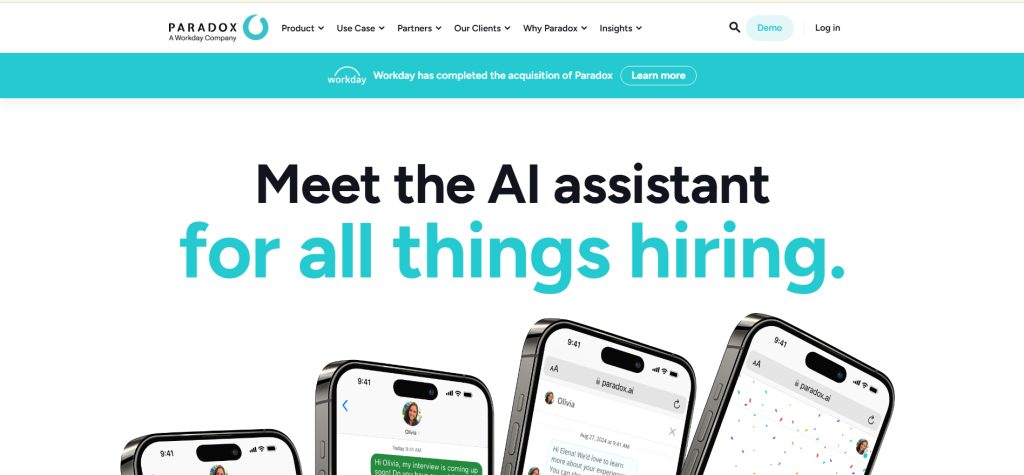
Paradox – Best Conversational AI for High-Volume Hiring
Popularity Score: 4.4/5 | User Score: 4.6/5 | Product Score: 4.2/5
Pricing: Custom enterprise pricing based on company size, hiring volume, and features. Industry estimates suggest $1,000+ per month. Prospective customers must request demo and quote. Not suitable for companies hiring <100 people annually.
Why We Chose It:
Paradox conversational AI assistant Olivia represents the most sophisticated chatbot-first approach to recruitment automation. Unlike tools that bolt chatbots onto existing systems, Paradox built its entire platform around conversational hiring, making it exceptionally effective for high-volume, hourly, and frontline recruiting where speed and candidate engagement are critical.
Key AI Features:
- Olivia: AI assistant that conducts natural language conversations 24/7 in 100+ languages
- Automated candidate screening via text/chat with knockout questions (qualifications, availability, authorization)
- AI-powered interview scheduling syncing with recruiter calendars and offering open slots
- Intelligent FAQ responses covering pay, benefits, requirements, culture (500+ customizable Q&As)
- SMS reminder automation for interviews, follow-ups, and onboarding tasks
- Conversational Apply (text, chat, or QR code applications no forms/logins required)
- Virtual hiring event automation (registration, screening, Q&A, instant scheduling)
- Candidate sentiment analysis collected in-the-moment throughout hiring journey
- Automated offer letter generation
Standout Capabilities:
- Mobile-first design allowing complete application/scheduling via smartphone
- Cuts “time-to-apply” by 58% with chatbot-driven application flow
- Customizable assistant voice, tone, and photo representing company brand
- Integration with major ATS/HRIS (Workday, SAP SuccessFactors, Greenhouse, UKG, ADP, Dayforce)
- Open API for custom integrations
- SOC 2 Type 2, ISO 27001, Privacy Shield, GDPR compliant
- Indeed integration increasing job click likelihood by 21%
- Internal employee referral program automation
- Real-time hiring manager feedback via app or text
Limitations:
- Complex user interface with steep learning curve
- Customer support can be slow (average 2-day response time reported)
- AI struggles with complex candidate questions, often asking for restatement
- “Set it and forget it” marketing promise doesn’t match reality requires ongoing management
- Training materials often outdated and not specific to implementation
- Backend fixes implemented without user notification
- Reporting and analytics need more flexibility and customization
- Not suitable for low-volume or infrequent hiring
Best For: Retail, hospitality, healthcare, QSR, and other industries with high-volume hourly hiring needs (hundreds to thousands of hires annually across multiple locations). Ideal for organizations prioritizing speed and mobile candidate experience.
Customer Base: 200+ clients including McDonald’s (50% faster hiring), Unilever (25% higher candidate satisfaction), GM ($2M annual savings), 7-Eleven (40,000 hours saved weekly), Chipotle (75% faster time-to-hire), Compass Group (120,000 hires/year with 20-person team), CVS Health, Lowe’s.
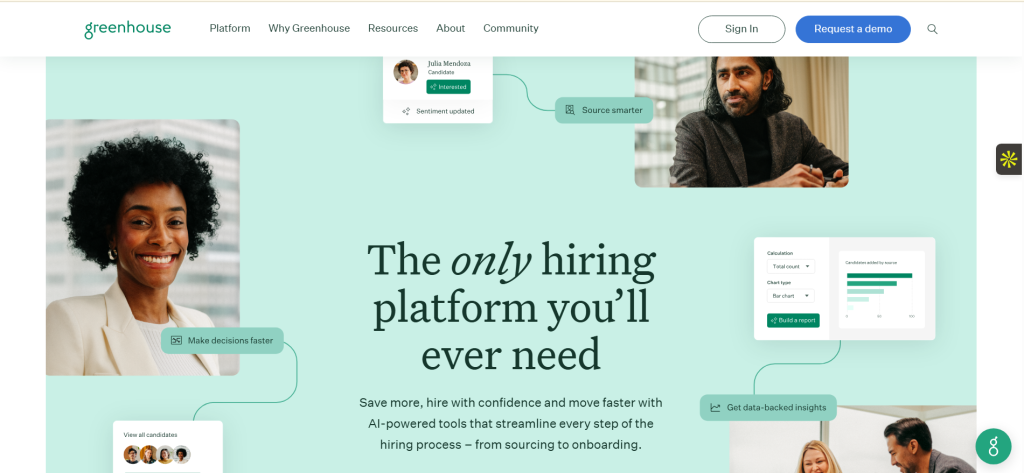
Greenhouse – Best for Structured Hiring and Scalability
Popularity Score: 4.5/5 | User Score: 4.4/5 | Product Score: 4.6/5
Pricing: Custom pricing (contact sales). No free trial available.
Why We Chose It:
Greenhouse has consistently delivered excellence in structured hiring since we first tested it in 2019. The platform encourages alignment upfront recruiting teams and hiring managers collaborate on scorecards, interview kits, and approval workflows before posting jobs. This structure prevents common hiring pitfalls and improves decision quality.
Key AI Features:
- AI-powered resume filtering with precision matching
- Interview feedback cleanup tool (turns messy notes into structured feedback)
- Email campaign auto-personalization using candidate profile data
- Customizable reporting dashboards with predictive analytics
Standout Capabilities:
- Structured interview framework promotes fairness and consistency
- Automated scheduling with self-service candidate booking
- Customizable workflows by role (recruiter vs. hiring manager views)
- 500+ integrations with major HR tech providers
- Excellent onboarding features for smooth candidate-to-employee transition
Limitations:
- Premium pricing (demo required for cost details)
- Advanced features may overwhelm small businesses
- External collaborators (agencies) face visibility limitations
- Lacks native video interview, CRM-level nurturing, true omni-channel sourcing
Best For: Mid-size to large internal TA teams managing multiple roles and stakeholders who need standardized evaluation processes.
Customer Base: 1,000+ companies including SpotHero, PetVet, Zerocater, CarGurus.
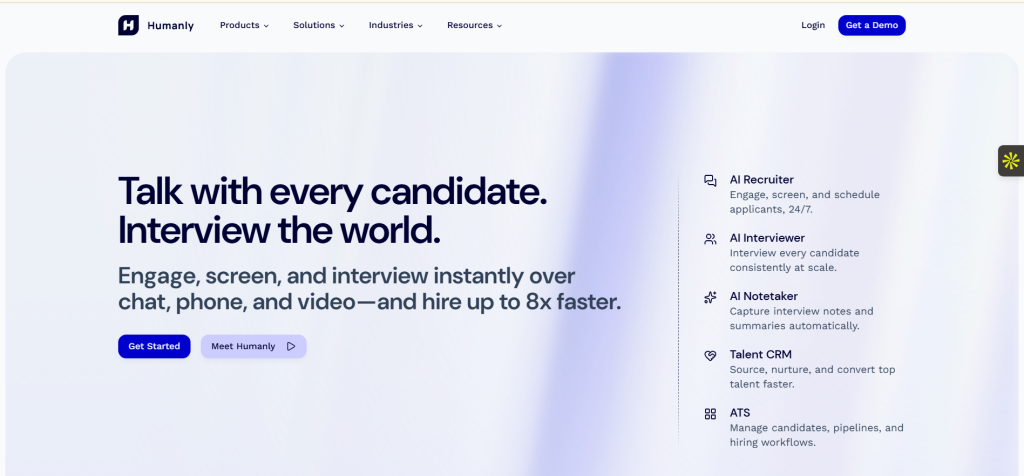
Humanly – Best for Conversational AI Screening
Popularity Score: 4.4/5 | User Score: 4.7/5 | Product Score: 4.3/5
Pricing: Custom pricing (contact sales). No free plans or trials.
Why We Chose It:
Humanly AI co-pilot automates screening, scheduling, and can even join live interviews to produce notes, transcripts, and insights. The conversational AI interviewer recently launched can conduct structured, real-time video interviews trained on your job criteria and employer brand.
Key AI Features:
- AI co-pilot conducts screening, scheduling, interviews
- Conversational AI for real-time video interviews
- Automated interview summaries with notes, transcripts, insights
- Generative AI for follow-up email drafts
- Reference checking automation
Standout Capabilities:
- Integrates with hundreds of ATS platforms
- Chrome extension for sourcing from LinkedIn, GitHub, etc.
- Clean, in-depth reporting module
- Multilingual support (interviews in 10 languages)
- 24/7 helpfulness via chatbot
Limitations:
- No candidate interview rescheduling
- No automated interview reminders to candidates/interviewers
- Pricing not publicly available
- Range of prebuilt integrations somewhat limited
- May be costly for smaller teams
Best For: Medium-sized companies streamlining recruiting with emphasis on reference checks, already have sourcing sites and ATS.
Customer Base: World Flight Services, Mossadams, Microsoft, The Key, Fazoli’s.
Limitations: No candidate interview rescheduling capability. Missing automated interview reminders for both candidates and interviewers. Limited prebuilt third-party integrations. Custom pricing only with no free trial available.
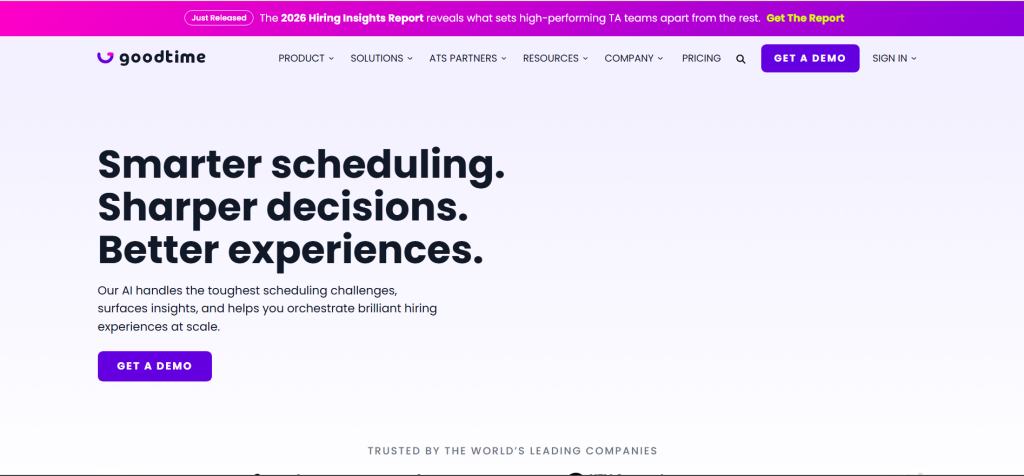
GoodTime – Best AI Interview Scheduling Platform
Popularity Score: 4.1/5 | User Score: 4.4/5 | Product Score: 4.4/5
Pricing: Custom pricing for companies with 250+ employees or anticipated growth to that level.
Why We Chose It:
GoodTime Orchestra AI agents represent one of the most sophisticated approaches to interview automation we’ve encountered. The platform doesn’t just schedule meetings it autonomously advances qualified candidates, sends rejection emails, triggers recruiter briefing requests, and holds natural candidate conversations.
Key AI Features:
- Orchestra AI agents automate scheduling, rescheduling, and 24/7 candidate communication
- Automated workflows for recruiter briefing requests and rejections at scale
- Capacity planning dashboard analyzing interviewer availability by job, stage, and trend
- Candidate sentiment summarization by department and timeframe
- Built-in interviewer training workflows and load balancing
Standout Capabilities:
- Natural, human-sounding AI conversations that escalate to recruiters when needed (via Slack/Chrome)
- Answers pre-interview candidate questions 24/7
- Integrates with Workday, iCIMS, Greenhouse, SmartRecruiters, and other major ATS platforms
- Custom branding options for candidate-facing portals
- Significantly reduces time-to-hire (some teams report <2 week hiring cycles)
Limitations:
- Only available to teams with 250+ employees
- Setup and customization can be complex initially
- Occasional technical bugs (timezone mismatches, calendar sync issues)
- Pricing may be prohibitive for leaner teams
- Doesn’t support sourcing or onboarding
Best For: Organizations with high interview volume looking to automate coordination while maintaining excellent candidate experience.
Customer Base: 300+ companies including HubSpot, HelloFresh, Pinterest.
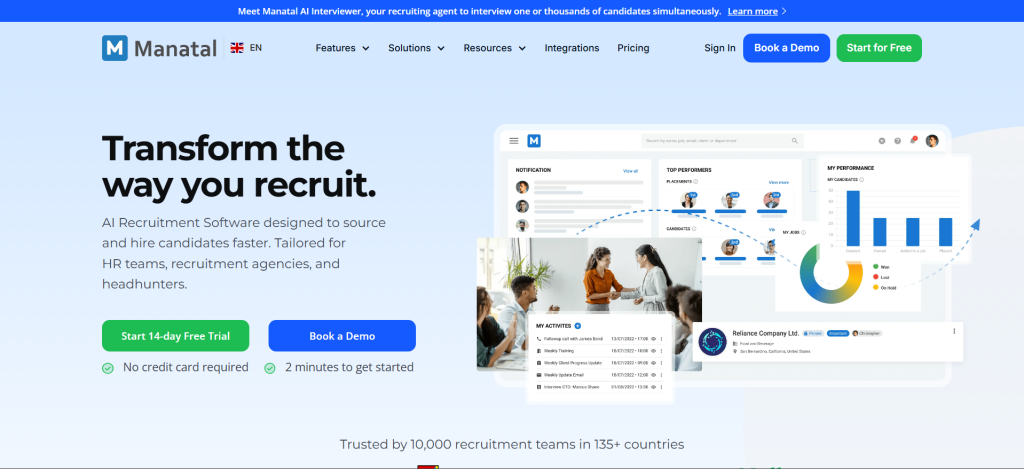
Manatal – Best Budget-Friendly AI ATS
Popularity Score: 4.2/5 | User Score: 4.7/5 | Product Score: 4.2/5
Pricing: Professional ($15/user/month), Enterprise ($35/user/month), Enterprise Plus ($55/user/month), Custom (contact sales). 14-day free trial available.
Why We Chose It:
Manatal punches above its weight class with AI-powered features typically found in premium tools. The AI-based recommendations feature scans job descriptions, searches your talent pool, and surfaces the most suitable candidates automatically.
Key AI Features:
- AI-based candidate recommendations matching JDs to talent pool
- AI-powered resume parsing and data enrichment
- Drag-and-drop visual pipelines
- Automated workflow triggers
Standout Capabilities:
- Extremely affordable starting at $15/month
- Reasonably easy to use with intuitive interface
- 24/5 online support, email support, documentation, video explainers
- Free onboarding and training
- Multilingual candidate data supported
Limitations:
- AI recommendations work best with English resumes
- Interface only available in English
- Career pages limited to English and Spanish
- No free plan (unlike some SMB-geared ATS)
- Limited prebuilt integrations
- API/Zapier access only on Custom plan
- Can’t combine Boolean Search with Advanced Search
Best For: SMBs wanting AI-enhanced recruiting on a tight budget without sacrificing essential features.
Customer Base: Unilever, Coca-Cola, Panasonic, Ogilvy, Toyota.
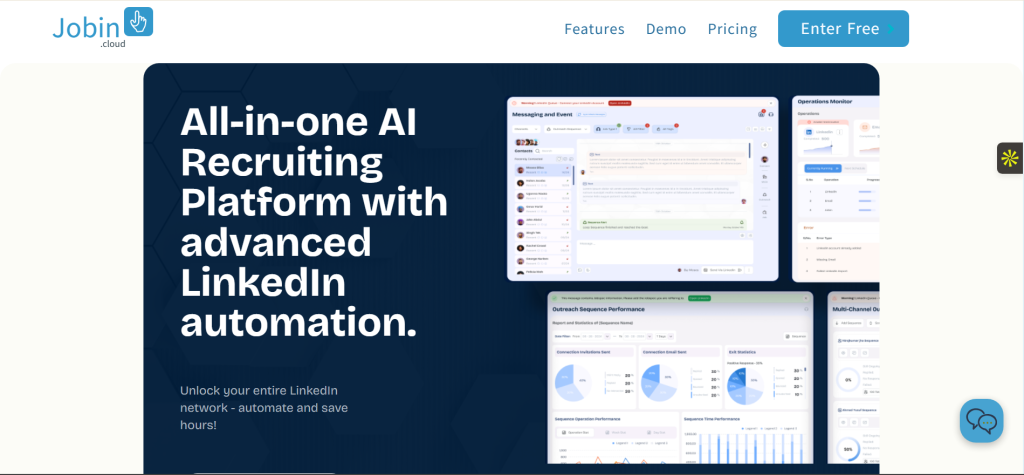
Jobin.cloud – Best AI Sourcing for LinkedIn-First Recruiters
Popularity Score: 4.2/5 | User Score: 4.5/5 | Product Score: 4.0/5
Pricing: Modular pricing from €7.99/month for LinkedIn Automation; Contact Finder and People Finder €16.99/month each; ChatGPT support €3.50/month. Free plan available.
Why We Chose It:
Jobin.cloud excels where speed and search simplicity matter. The AI search autopilot expands job descriptions semantically and the scoring engine distinguishes between proven, mentioned, inferred, and missing qualifications excellent for soft skills or hard-to-filter criteria.
Key AI Features:
- AI search autopilot with semantic job description expansion
- Detailed scoring: proven vs. mentioned vs. inferred vs. missing qualifications
- Global sourcing from 3.2B aggregated profiles via X-ray and web scraping
- ChatGPT-powered personalization with saved prompts
- Bulk LinkedIn sourcing with auto-enrichment (no Premium required)
Standout Capabilities:
- Generous free plan: 10,000 contacts, 5 enrichment credits, 15 daily messages, 30 AI prompts
- Built-in CRM with visual pipelines and activity tracking
- Up to 10,000 contacts managed with filtering, tags, pipelines
- Free outreach automation: 15 daily LinkedIn messages, 100 daily emails
Limitations:
- Dense interface takes time to learn
- Lacks core features (video interviewing, chatbot, onboarding)
- Integrations via API/Zapier/Make.com only no native one-click ATS connectors
- Design feels dated compared to modern platforms
Best For: High-output sourcing teams or startups expanding into unfamiliar roles who need affordable, flexible sourcing.
Customer Base: 5,000+ users globally.
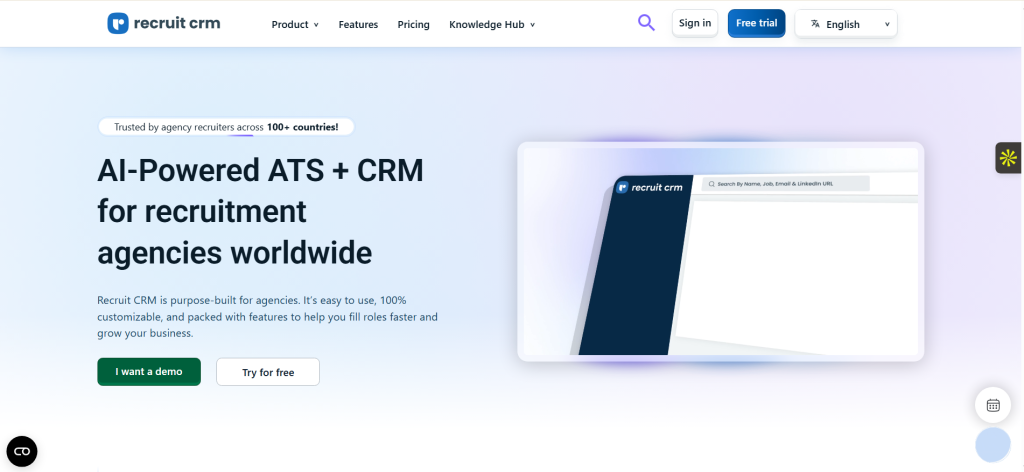
Recruit CRM – Best for Staffing Agencies
Popularity Score: 4.1/5 | User Score: 4.7/5 | Product Score: 4.4/5
Pricing: Annual billing from $40-125/user/month with add-ons from $12/month. Free trial available.
Why We Chose It:
Recruit CRM stands out for deeply integrated AI features built directly into recruiting workflows. From resume parsing and candidate matching to GPT-powered job descriptions, summaries, and email generation, it streamlines sourcing and communication efficiently.
Key AI Features:
- Integrated AI-Assist panel (resume parsing, email creation, summaries, transcription)
- Multilingual AI outputs including job-candidate matching and email templates
- Candidate-to-candidate matching using holistic scoring (not just keywords)
- Custom and saved prompts for faster repeat workflows
- AI Sourcing (X-Ray Search) pulls enriched LinkedIn profiles directly
- Call transcription with action item extraction
Standout Capabilities:
- No extra fees for basic data migration (Excel/CSV imports)
- Average customer service response time under 2 minutes
- Powerful LinkedIn integration
- Executive/Recruitment Report PDF generator
- Extensive resource library (blogs, JD templates, glossary)
Limitations:
- AI usage capped at 2M tokens/month per user
- Email sequences limited on lower-tier plans (one sequence on entry plan)
- Call transcription has 25MB audio limit (~1.5 hours)
- Only 2 AI matches on Free/Pro plans (full access requires Business/Enterprise)
- Clearly designed for staffing agencies (limited for in-house TA teams)
- Limited native integrations beyond LinkedIn, Zapier, Logic Melon
Best For: Staffing agencies needing streamlined sourcing, screening, and communication with flexible AI-powered workflows.
Customer Base: 1,200+ companies including Avizio, Zeren, Cooper Coleman.
Hirefly – Best for Autonomous Sourcing
Popularity Score: 4.2/5 | User Score: 4.6/5 | Product Score: 4.1/5
Note – Wellfound Acquires Hirefly
Pricing: Autopilot starts at $2,000/month per job slot; FastTrack ranges from $50-100/month per job slot.
Why We Chose It:
Hirefly eliminates manual sourcing entirely with its two AI agent systems: Autopilot for outbound sourcing and FastTrack for inbound application review. During testing, we went from job description to interview-ready candidates in days with minimal setup.
Key AI Features:
- Autopilot: Autonomous outbound sourcing finds, contacts, shortlists interested candidates
- FastTrack: 80% faster resume review with candidates sorted into Great Fit/Borderline/Poor Fit
- Continuous learning from recruiter feedback to improve matching
- Two-way integrations with major ATS platforms
Standout Capabilities:
- Autopilot only needs job description + 3 example LinkedIn profiles to start
- AI agents learn from your accept/reject decisions
- Handles both inbound and outbound talent acquisition
- Significantly reduces manual screening time
Limitations:
- Less effective for roles not well-represented on LinkedIn (blue-collar, retail)
- Lacks features beyond candidate sourcing
- Limited ATS integrations, no open API
- Higher pricing may be prohibitive for smaller teams
Best For: Companies regularly filling white-collar roles at scale who want to replace manual sourcing or reduce agency dependence.
Customer Base: JLL, Lyft, Indeed, ZipRecruiter.
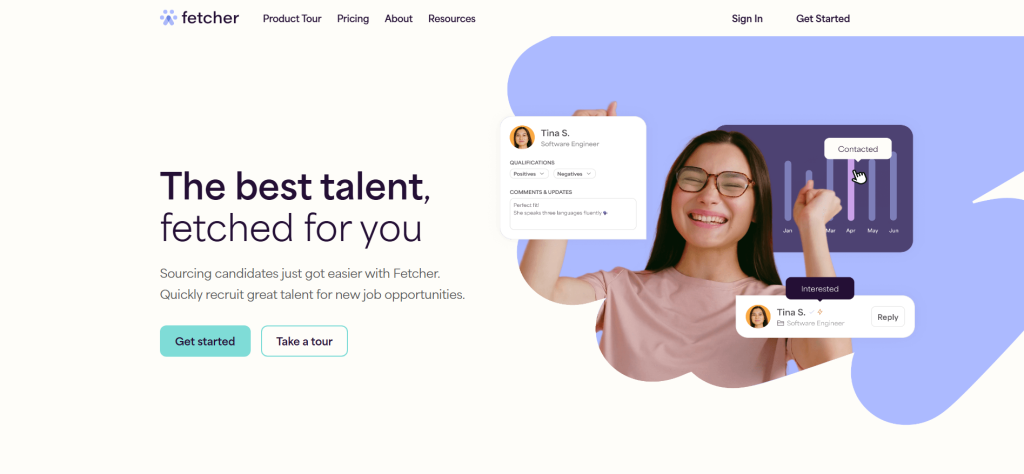
Fetcher – Best for Automated Outbound Recruiting
Popularity Score: 4.2/5 | User Score: 4.5/5 | Product Score: 4.1/5
Pricing: Growth plan: $499/month ($379/month annual) for 500 candidates sourced + 2,500 screened annually. Amplify plan: $849/month ($649/month annual) for 1,000 candidates sourced + 5,000 screened annually. Enterprise: Custom pricing. 20% discount for annual payment. Free trial not available; demo required.
Why We Chose It:
Fetcher distinguishes itself with a unique hybrid model combining AI-powered automation with human recruiting expertise. Unlike pure-play AI tools, every plan includes access to a dedicated team of human sourcers who work alongside the technology to refine searches and vet candidates. This approach delivers higher-quality candidate matches than fully automated alternatives.
Key AI Features:
- AI-automated candidate sourcing from LinkedIn, job boards, databases, and proprietary sources
- Machine learning that learns company candidate preferences over time
- Automated outreach with personalized email campaign sequences (1-6 emails)
- AI-powered candidate screening and ranking based on job requirements
- Smart profile enrichment with verified personal email addresses
- Diversity search criteria to build representative pipelines
- Predictive candidate matching with continuous calibration from user feedback
- Chrome extension for one-click candidate capture across the web
Standout Capabilities:
- Human-in-the-loop model: Real sourcers augment AI for quality assurance
- Interested candidate batches delivered directly to inbox (no database searching)
- ATS/CRM integration (Greenhouse, Lever, BambooHR, Workday) with automatic status updates
- Email integration syncing with Gmail/Outlook for seamless communication
- Slack notifications when candidates express interest
- Analytics dashboard tracking response rates, interest rates, engagement, diversity metrics
- Team performance tracking identifying bottlenecks and optimization opportunities
- Personalized campaigns automatically customized for candidate and position
Limitations:
- Significantly more expensive than competitors (LinkedIn Recruiter starts at $170/month, Skima at $49/month)
- Annual sourcing limits (500-1,000 candidates) may be constraining for high-volume teams
- AI matching occasionally requires manual adjustments and fine-tuning
- May take several iterations to optimize keywords and target organizations
- Email deliverability issues reported by some users
- Effectiveness varies by role and industry
- Initial setup and integration can be time-consuming
- Not suitable for low-volume hiring (<10 jobs per year)
Best For: Mid-size to large companies with consistent hiring needs (20-100+ hires annually) seeking to replace or reduce agency spend. Particularly effective for technical roles, knowledge workers, and positions requiring specialized skills across engineering, finance, product, operations, marketing, sales, and customer success.
Customer Base: Used by growth-stage startups and established companies; specific customer names not publicly disclosed, but serves organizations across technology, finance, healthcare, and professional services sectors.
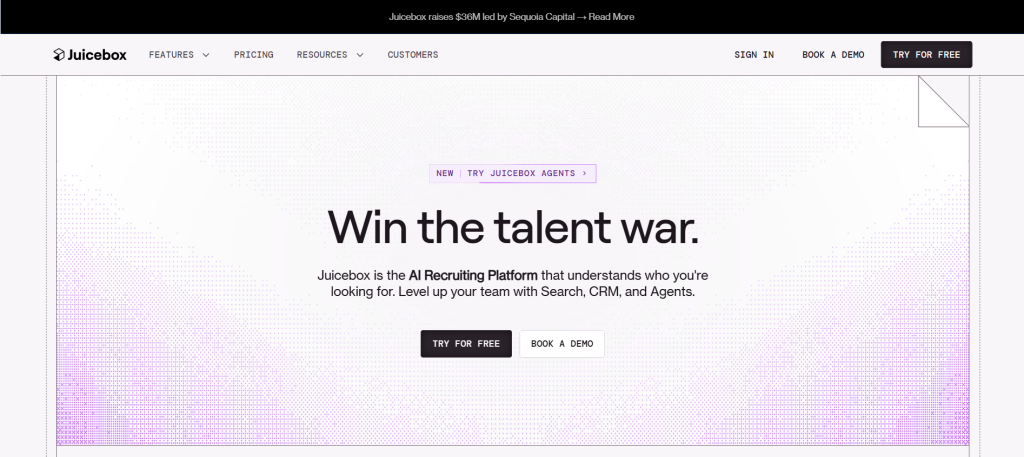
Juicebox – Best for Flexible AI-Powered Sourcing
Popularity Score: 4.0/5 | User Score: 4.4/5 | Product Score: 4.0/5
Pricing: Starts at $79/month with free trials and up to 25% annual discounts.
Why We Chose It:
Juicebox focuses intensely on sourcing-focused AI rather than generic “AI-washed” marketing. The Find Similar Profiles feature particularly impressed us highlight 2-3 ideal candidates and instantly receive hundreds of lookalikes with shared key attributes.
Key AI Features:
- Find Similar Profiles generates 500 lookalikes instantly
- Autopilot ranks candidates with clear, AI-driven justifications
- Advanced filters including career growth signals and funding-stage targeting
- Multi-step outreach sequences supporting email and LinkedIn
- Multiple AI-assisted search options (prompt, Boolean, manual)
Standout Capabilities:
- Clean, fast UI searches complete in seconds
- Private agents automate sourcing and messaging workflows
- Frequent feature updates show strong product momentum
- Recruiter-controlled outreach (not fully automated)
Limitations:
- Lacks AI scheduling, chatbots, job description generation
- Non-enterprise plans receive email-only support
- Sequencing functionality still maturing compared to Fetcher/HireEZ
Best For: Sourcing-focused teams wanting flexible, AI-powered searches with DIY outreach control.
Customer Base: 1,500+ organizations including Perplexity, Assured, AngelList.
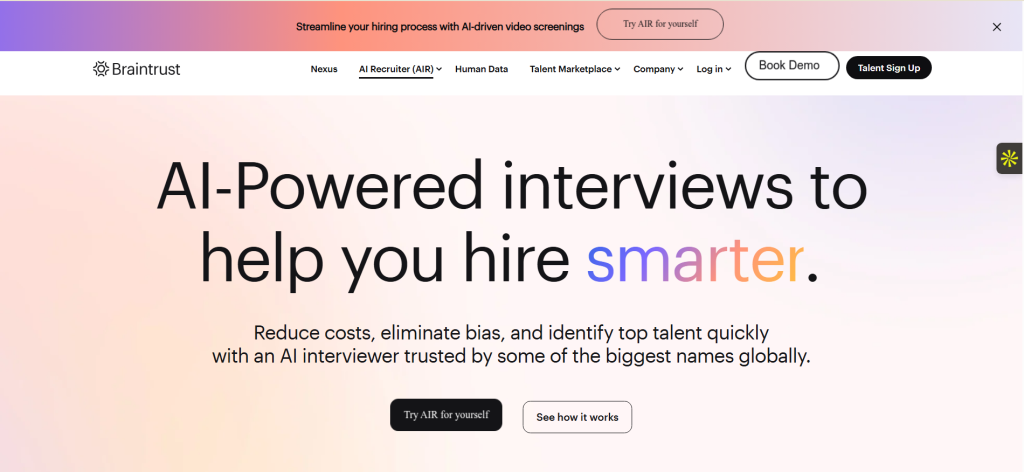
Braintrust – Best for Advanced AI Interviewing
Popularity Score: 4.1/5 | User Score: 4.5/5 | Product Score: 4.0/5
Pricing: Custom pricing based on usage and company size.
Why We Chose It:
Braintrust Air delivers one of the most realistic AI-led interview experiences we’ve encountered. The AI interviewer holds natural conversations, asks clarifying follow-up questions, identifies knowledge gaps, and produces detailed scorecards with strengths, weaknesses, and improvement suggestions.
Key AI Features:
- AI voice interviewer (AIR) conducts structured real-time interviews
- Natural conversation flow with adaptive follow-up questions
- AI-generated scorecards, interview summaries, and candidate feedback
- Bias mitigation through PII exclusion from models
- Multilingual support (interviews in 10 languages)
Standout Capabilities:
- Candidates complete interviews anytime (improved flexibility/convenience)
- Centralized dashboard for watching interviews, reading scorecards, leaving notes
- Integrates with enterprise ATS (Greenhouse, Workday)
- Can function as basic ATS for smaller teams
Limitations:
- No proactive candidate sourcing tools
- Built-in ATS features basic compared to standalone platforms
- No automated past candidate re-engagement
- Interview experience may feel impersonal to some candidates
Best For: Teams conducting high-volume early-stage screening who want consistent, fair evaluation at scale with transparent AI use.
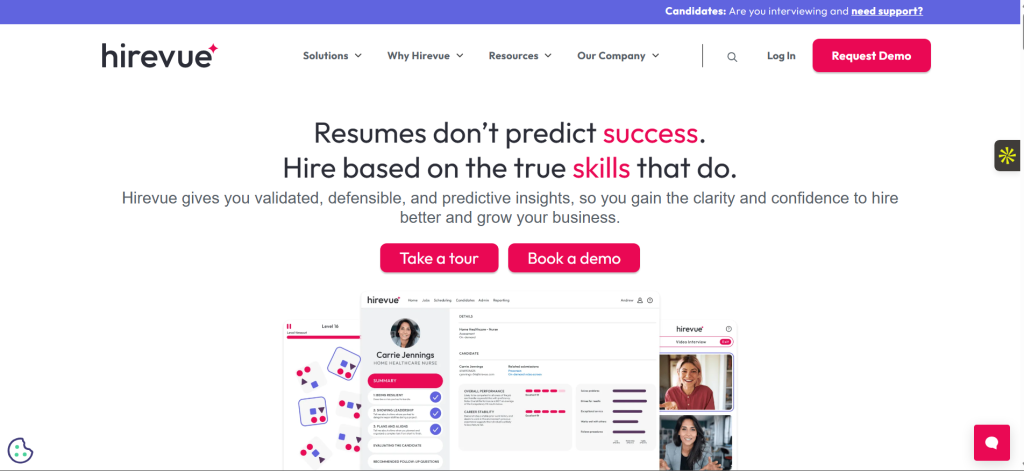
HireVue – Enterprise Video Interview AI
Popularity Score: 4.3/5 | User Score: 4.2/5 | Product Score: 4.4/5
Pricing: Enterprise custom pricing starting from approximately $35,000/year for small teams. Mid-sized organizations typically pay $60,000-100,000 annually. No free trial; demo required.
Why We Chose It:
HireVue pioneered AI-powered video interviewing in 2004 and remains the enterprise standard for combining structured interviews with predictive analytics. The platform excels at high-volume screening where traditional methods create bottlenecks, and its comprehensive assessment tools provide deeper candidate insights than resume reviews alone.
Key AI Features:
- AI-powered on-demand and live video interviews with structured templates
- Multidimensional candidate evaluation analyzing speech, language, and written responses
- Game-based cognitive assessments measuring communication, problem-solving, and leadership
- Predictive analytics engine analyzing up to 25,000 data points per interview
- Virtual Job Tryouts that simulate actual job tasks for skills validation
- AI-powered skill validation and assessment automation
- Automated interview scheduling with calendar synchronization
- Real-time collaboration tools for hiring team feedback
Standout Capabilities:
- 40+ language support for global hiring reach
- FedRAMP-authorized (only hiring solution with this certification for public sector)
- Interview templates built by organizational psychologists
- Seamless ATS integration (Workday, Greenhouse, SmartRecruiters, iCIMS, SAP SuccessFactors)
- Both live and asynchronous interview formats
- Panel interview capabilities for distributed teams
- Technical skills assessment with auto-scoring for non-technical hiring teams
- Virtual campus recruiting without physical campus visits
- Interview Builder for creating structured questions and evaluation guides
Limitations:
- Extremely high cost ($35,000+ annually) prohibitive for SMBs
- Complex implementation requiring 2-4 months
- Steep learning curve for administrators
- No open API available
- Some candidates find AI video analysis impersonal or anxiety-inducing
- Limited customization options compared to flexibility promised
- May require candidate training on how to use the platform
- Potential bias concerns despite vendor claims of fairness
- Works best for large organizations with dedicated resources
Best For: Large enterprises and mid-market companies conducting high-volume hiring (100+ hires annually) who need standardized evaluation across geographies and can justify premium pricing with efficiency gains.
Customer Base: 700+ companies with $1B+ annual revenue, including Emirates Airlines (reduced hiring from 60 to 7 days), Holcim (89% increase in hiring speed), Unilever, Goldman Sachs, and federal government agencies.
ven (40,000 hours saved weekly), Chipotle (75% faster time-to-hire), Compass Group (120,000 hires/year with 20-person team), CVS Health, Lowe’s.
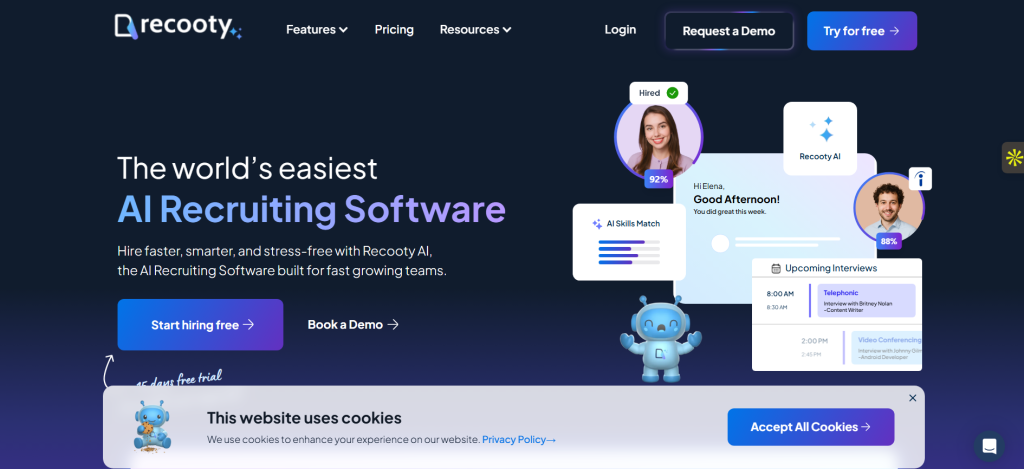
Recooty – Easy Multilingual ATS with AI
Popularity Score: 4.0/5 | User Score: 4.6/5 | Product Score: 3.9/5
Pricing: Starter: $99/month (1 user, 1 active job). Professional: $199/month (3 users, 3 active jobs). Business: $299/month (5 users, 10 active jobs). Enterprise: Custom pricing for unlimited users and jobs. 15-day free trial available. Annual billing offers 20% discount.
Why We Chose It:
Recooty stands out for its exceptional multilingual capabilities and user-friendly interface at an affordable price point. While not the most feature-rich platform, it delivers solid AI resume matching and essential ATS functionality for small to mid-sized international teams hiring across languages and geographies.
Key AI Features:
- AI-powered resume parsing and candidate matching
- Smart candidate scoring based on job requirements
- Automated candidate ranking by fit
- AI job description enhancement suggestions
- Resume screening with keyword and skills extraction
- Intelligent candidate recommendations from existing talent pool
Standout Capabilities:
- 15+ language support for interface and candidate communication
- Career page builder with multilingual capability
- One-click job posting to 100+ job boards globally
- Team collaboration tools with role-based permissions
- Branded career sites matching company identity
- Chrome extension for sourcing from LinkedIn and job boards
- Email integration and templates
- Pipeline management with drag-and-drop
- Video interview capabilities (basic)
- Mobile app for iOS and Android
- GDPR compliant data handling
Limitations:
- AI capabilities less sophisticated than premium competitors
- Limited advanced analytics and reporting
- Smaller integration ecosystem (focuses on essential integrations only)
- No built-in AI chatbot or conversational interface
- Video interview features basic compared to HireVue/Spark Hire
- Customer support limited to email/chat (no phone support on lower tiers)
- May lack advanced features needed by enterprise organizations
- Scalability constraints for very high-volume hiring
Best For: Small to mid-sized international businesses (10-200 employees) hiring across multiple countries and languages. Particularly valuable for companies with distributed global teams, multilingual candidate pools, or European operations requiring GDPR compliance.
Customer Base: 1,000+ companies across 50+ countries, primarily small businesses and growing mid-market companies in technology, e-commerce, education, and professional services sectors.
Wellfound (formerly AngelList Talent) – Startup-Focused AI Sourcing
Popularity Score: 4.3/5 | User Score: 4.4/5 | Product Score: 4.2/5
Pricing: Free plan available with basic features. Paid plans starting at $299/month for Recruiter Pro with enhanced sourcing. Enterprise custom pricing for larger teams. Unique “curated candidate” model where human curators augment AI matching.
Why We Chose It:
Wellfound (previously AngelList Talent) uniquely combines AI-powered sourcing with human curator oversight, specifically designed for startup hiring. The platform’s talent pool is pre-qualified for startup environments, making it exceptionally efficient for early-stage companies seeking technical talent who want equity, ownership, and mission-driven work.
Key AI Features:
- AI candidate matching based on skills, experience, and startup preferences
- Machine learning recommendations improving with recruiter feedback
- Automated candidate discovery from 10M+ startup-focused profiles
- AI-powered search filters (technical skills, startup stage preference, equity expectations)
- Smart notification system alerting recruiters to high-potential candidates
- Predictive interest scoring (likelihood candidate will respond)
Standout Capabilities:
- Curated candidate lists: Human experts + AI select best matches
- Startup-specific talent pool with candidates actively seeking startup roles
- Free tier enables startups to hire without cash burn
- Direct messaging to candidates (bypassing InMail-style barriers)
- Transparent salary and equity ranges posted with jobs
- Company profiles showcasing mission, team, funding, culture
- Candidate preference filters (remote work, visa sponsorship, equity minimum)
- Integration with major ATS platforms
- Startup ecosystem insights and benchmarking data
Limitations:
- Limited to primarily tech/startup talent (not suitable for non-tech or enterprise hiring)
- Smaller candidate pool compared to LinkedIn (quality over quantity approach)
- Geographic concentration in major tech hubs (SF, NYC, Austin, Seattle)
- Less effective for senior executive searches
- AI matching less sophisticated than specialized tools like hireEZ or SeekOut
- Basic reporting and analytics
- Customer support primarily self-service on free tier
Best For: Early-stage startups (seed to Series B) hiring technical talent (engineers, designers, product managers, data scientists) who value mission-driven work, equity compensation, and startup culture. Particularly effective for companies with limited recruiting budgets.
Customer Base: 8M+ candidates and 130,000+ startups including Stripe, Notion, Figma, Airtable, and thousands of early-stage companies across YC, Techstars, and major accelerators.
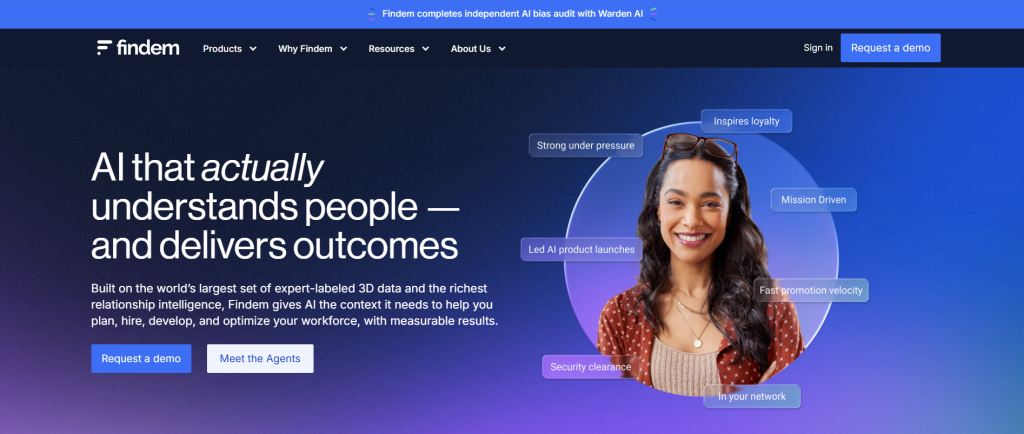
Findem – Attribute-Based AI Sourcing
Popularity Score: 4.1/5 | User Score: 4.3/5 | Product Score: 4.3/5
Pricing: Enterprise custom pricing based on seats, data access, and feature requirements. Pricing not publicly disclosed. Typical annual contracts range $20,000-60,000+ depending on company size and usage.
Why We Chose It:
Findem pioneered “attribute-based sourcing,” moving beyond keyword searches to understand the actual attributes that correlate with success in specific roles. The platform’s AI analyzes 750+ million global profiles to identify hidden talent patterns, making it exceptionally powerful for diversity hiring and skills-based recruitment.
Key AI Features:
- AI-powered attribute analysis identifying 750+ characteristics per candidate
- People graph technology mapping career trajectories and skill development
- Predictive matching based on success patterns in similar roles
- Dynamic diversity sourcing with intersectional filters
- Automated talent pipeline building and refreshing
- AI talent insights showing market availability and competitive intelligence
- Skills taxonomy mapping technical and soft skills across industries
Standout Capabilities:
- Diversity-first design with DEI analytics built into core platform
- Attribute scoring beyond resume keywords (career velocity, growth trajectory, adjacent skills)
- Market intelligence showing talent density by location, skills, industries
- Talent rediscovery surfacing past applicants matching new roles
- Multi-source data aggregation (LinkedIn, GitHub, patents, publications, social)
- Compensation benchmarking by role, location, experience
- Integration with major ATS platforms
- Chrome extension for enriching profiles
- CRM-style talent relationship management
Limitations:
- Enterprise pricing prohibitive for SMBs
- Steep learning curve to leverage advanced features
- Implementation requires 4-6 weeks
- Best results require dedicated sourcing specialists
- Some users report data accuracy issues with less common profiles
- Expensive compared to alternatives with similar capabilities
- May provide overwhelming data for basic sourcing needs
Best For: Enterprise talent acquisition teams (50+ recruiters) with strong diversity hiring mandates, skills-based hiring strategies, and sophisticated sourcing requirements. Particularly effective for technical recruiting, executive search, and competitive talent mapping.
Customer Base: 100+ enterprise clients including Workday, Palo Alto Networks, Snowflake, and Fortune 500 companies. Strong presence in technology, financial services, and healthcare sectors.
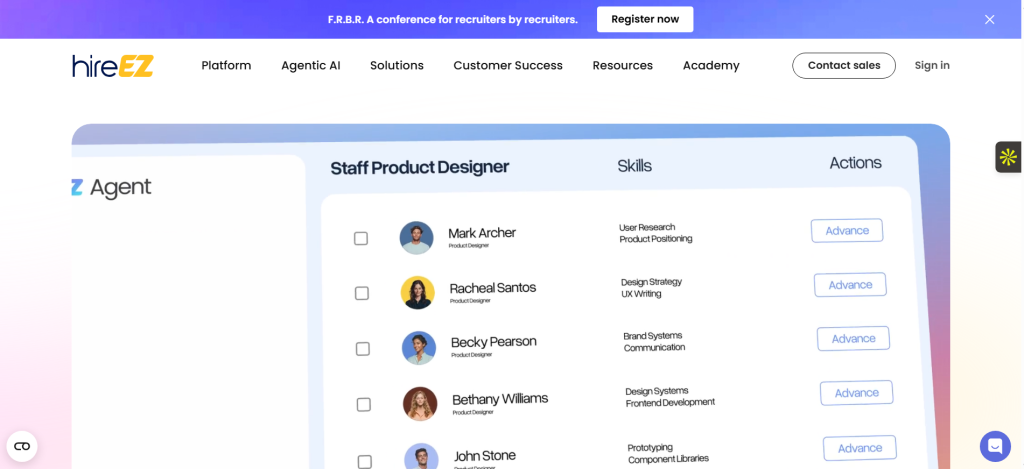
hireEZ (formerly Hiretual) – AI Sourcing with DEI Filters and CRM
Popularity Score: 4.3/5 | User Score: 4.4/5 | Product Score: 4.2/5
Pricing: Custom enterprise pricing based on organization size, user count, and features. Public pricing not disclosed. Industry reports suggest $10,000-35,000+ annually depending on team size and feature selection. Demo required for quote.
Why We Chose It:
hireEZ combines powerful AI-driven sourcing across 45+ platforms with robust CRM functionality and industry-leading diversity filters. The platform’s strength lies in its ability to both discover new talent and re-engage past candidates, creating a comprehensive talent intelligence system rather than just a sourcing tool.
Key AI Features:
- AI sourcing engine searching 800M+ profiles across LinkedIn, GitHub, Stack Overflow, Behance, Dribbble, AngelList, and 40+ other platforms
- Natural language search (ask questions instead of Boolean strings)
- AI candidate matching with “find similar” functionality
- Automated outreach sequences with AI-personalized messaging
- Talent rediscovery surfacing past applicants for new roles
- Predictive analytics showing candidate responsiveness likelihood
- AI-powered email optimization and A/B testing
Standout Capabilities:
- Comprehensive DEI sourcing with filters for underrepresented groups
- CRM-style relationship management tracking touchpoints and engagement history
- Chrome extension enabling sourcing from any website
- Multi-channel outreach (email, LinkedIn, InMail) from single interface
- Campaign analytics showing open rates, response rates, conversion by source
- Team collaboration with shared talent pools and notes
- Integration with 40+ ATS platforms (Greenhouse, Lever, Workday, SmartRecruiters)
- Skills-based search beyond job titles
- Contact enrichment with personal emails and phone numbers
- Talent mapping for competitive intelligence
Limitations:
- Steep learning curve requiring dedicated training
- Enterprise pricing not accessible to SMBs
- Best results require consistent use by dedicated sourcers
- Ongoing campaign optimization needed (not “set and forget”)
- Contact data accuracy varies
- Complex interface can be overwhelming initially
- Implementation requires 2-4 weeks
- Some users report customer support response delays
Best For: Mid-size to large recruiting teams (10+ recruiters) focusing heavily on proactive sourcing, especially for technical roles, executive searches, and diversity hiring initiatives. Most effective when used by dedicated sourcers rather than generalist recruiters.
Customer Base: 1,000+ companies including Amazon, Siemens, GitLab, Reddit, and various technology companies, financial services firms, and healthcare organizations.
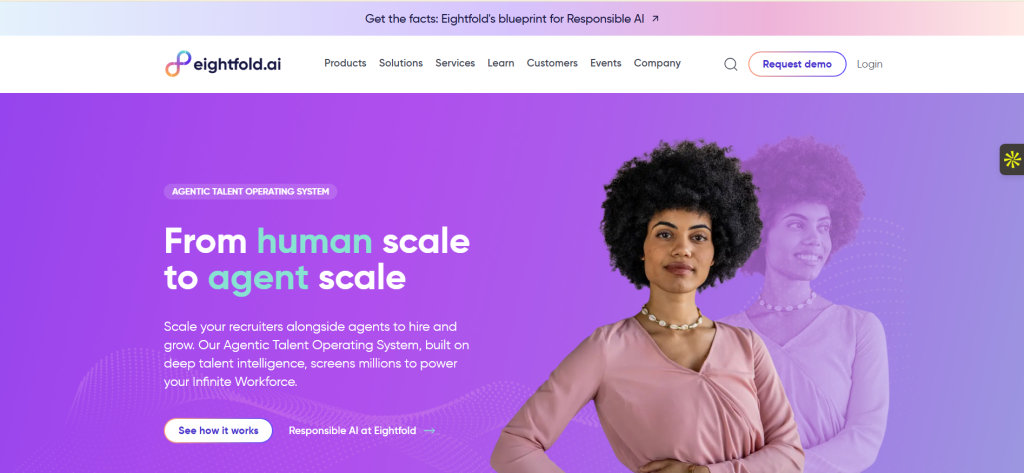
Eightfold AI – AI for Total Talent Management
Popularity Score: 4.2/5 | User Score: 4.1/5 | Product Score: 4.5/5
Pricing: Enterprise custom pricing based on employee count, modules selected, and implementation scope. Pricing not publicly disclosed. Typical deployments range $50,000-500,000+ annually for enterprise. Requires 3-6 month implementation with dedicated resources.
Why We Chose It:
Eightfold AI represents the most comprehensive AI talent intelligence platform available, extending beyond recruitment into internal mobility, skills development, succession planning, and workforce planning. Its deep learning AI doesn’t just fill open roles it optimizes total talent management across the employee lifecycle.
Key AI Features:
- Deep learning talent intelligence analyzing 1B+ profiles globally
- AI skills ontology mapping 50,000+ skills across industries and roles
- Predictive candidate success modeling based on performance data
- Internal talent marketplace matching employees to projects and roles
- AI-powered succession planning identifying future leaders
- Skills gap analysis and development recommendations
- Automated job description creation based on skills requirements
- Diversity sourcing with bias detection and mitigation
- Candidate rediscovery from internal and external talent pools
Standout Capabilities:
- Unified platform covering external hiring, internal mobility, talent management, and workforce planning
- Skills-based architecture moving beyond credentials to capabilities
- Career pathing showing development opportunities for employees
- Workforce planning forecasting future talent needs
- Talent retention analytics predicting flight risk
- Learning and development integration recommending upskilling
- Compensation intelligence benchmarking market rates
- Diversity analytics across entire talent lifecycle
- Integration with major HRIS/HCM platforms (Workday, SAP SuccessFactors, Oracle HCM)
- Global reach with multilingual support
Limitations:
- Extremely high cost limiting to large enterprises only
- Complex implementation requiring 3-6 months with dedicated project team
- Steep learning curve across all modules
- Best ROI requires full platform adoption (not individual modules)
- Requires significant ongoing data input and maintenance
- May be overkill for organizations only needing recruiting functionality
- Change management challenges getting organization to adopt skills-based approach
- Integration complexity with legacy HR systems
Best For: Large enterprises (1,000+ employees) with strategic talent management focus, committed to skills-based hiring and internal mobility, and willing to make multi-year platform investment. Most valuable for organizations facing skills shortages and prioritizing talent development and retention.
Customer Base: 200+ global enterprises including Chevron, Tata Consultancy Services, AB InBev, Bayer, Vodafone, and major healthcare, manufacturing, financial services, and technology companies.
How to Choose the Right AI Recruiting Tools
1. Identify Your Primary Hiring Challenges
Begin by clearly defining which aspects of your recruitment process require the most improvement. Different AI recruiting tools excel in different areas:
- High-volume screening bottlenecks → AI-powered ATS with resume parsing and candidate ranking
- Limited candidate pipeline → AI sourcing and talent intelligence platforms
- Interview scheduling delays → AI interview coordination tools
- Poor candidate experience → Conversational AI and chatbots
- Initial screening labor → AI screening and assessment platforms
2. Evaluate Integration Capabilities
AI recruiting tools deliver maximum value when they integrate seamlessly with your existing HR technology stack. Prioritize platforms offering:
- Native integrations with your current ATS or HRIS system
- Calendar integration (Google Calendar, Outlook, etc.)
- Communication platform connectivity (Slack, Microsoft Teams)
- Job board and LinkedIn integration
- API availability for custom integrations
3. Assess Transparency and Bias Mitigation
With increasing regulatory scrutiny including New York City’s Local Law 144 and the EU AI Act, understanding how AI systems make decisions is crucial. Evaluate vendors based on:
- Clear explanations of how algorithms evaluate candidates
- Availability of bias audits and compliance documentation
- Human oversight mechanisms and override capabilities
- Commitment to ethical AI principles and regular updates
- Training data transparency and diversity considerations
4. Consider Organization Size and Hiring Volume
Different AI recruiting platforms target different market segments:
- Small Businesses (1-50 employees): Manatal, Jobin.cloud, or Workable offer affordable entry points with essential AI features
- Mid-Market Companies (50-1000 employees): Greenhouse, Humanly, Recruit CRM provide scalability with advanced features
- Enterprise Organizations (1000+ employees): Paradox, GoodTime, Eightfold deliver enterprise-grade automation and global support
- Staffing Agencies: Recruit CRM specifically designed for agency workflows and client management
5. Request Demos and Reference Customers
AI recruiting vendor claims often exceed actual performance. Conduct thorough due diligence by:
- Requesting live demos using your actual job descriptions and requirements
- Speaking directly with reference customers in similar industries and company sizes
- Testing free trials or pilot programs when available
- Reviewing verified user reviews on independent platforms
- Evaluating customer support quality and response times
AI Recruiting Tools Pricing Guide
AI recruiting software pricing varies significantly based on features, organization size, and implementation complexity. Understanding common pricing models helps budget appropriately and compare options effectively.
Common Pricing Models
Per-User Pricing: Most AI-enhanced ATS platforms charge monthly or annual fees per recruiter seat. Typical ranges:
- Budget: $15-$50/user/month (Manatal, basic plans)
- Mid-Range: $50-$150/user/month (Recruit CRM, Teamtailor)
- Premium: $200-$500/user/month (advanced features, enterprise support)
- Enterprise: Custom pricing (Greenhouse, Eightfold, Workday)
Per-Job Pricing: AI sourcing tools often charge based on active job slots:
- Hirefly Autopilot: $2,000/month per job slot
- Hirefly FastTrack: $50-$100/month per job slot
- Fetcher: Custom pricing based on job volume
Platform Fee Pricing: Comprehensive platforms charge flat monthly fees regardless of user count:
- Workable: Starting at $299/month (includes multiple users)
- Additional features (video interviews, assessments) sold separately
Modular Pricing: Pay only for features needed:
- Jobin.cloud: €7.99/month for LinkedIn Automation, €16.99/month for Contact Finder, €3.50/month for AI messaging
- Allows customization to specific workflow needs
Free Plans and Trials: Limited free options available:
- Jobin.cloud: Generous free plan with 10,000 contacts and basic outreach
- Wellfound: Free startup-focused sourcing platform
- Most premium platforms: 14-day free trials (Workable, Manatal, Recruit CRM)
Hidden Costs to Consider
- Implementation and setup fees: One-time costs ranging from $500 to $10,000+ for enterprise deployments
- Training and onboarding: Time investment for team training, sometimes requiring paid consulting
- Integration costs: Additional fees for API access, custom integrations, or premium connectors
- Add-on features: Video interviews, assessments, background checks often sold separately
- Usage limits: Overage charges for exceeding job postings, candidate contacts, or AI query caps
AI Recruiting Compliance and Legal Considerations
Regulatory frameworks governing AI in hiring have matured significantly in 2026. Organizations must navigate increasing compliance requirements while implementing AI recruiting tools responsibly.
Key Regulatory Requirements
New York City Local Law 144: Continues to require annual bias audits and candidate notification before using automated employment decision tools. Organizations must provide notices explaining AI use in hiring decisions and make audit results publicly available.
EU AI Act: Classifies recruitment AI as ‘high-risk’ requiring strict compliance including transparency obligations, human oversight mechanisms, and technical documentation. Obligations for general-purpose AI began in August 2026, raising compliance expectations for employers and vendors deploying hiring technology.
California AB 331: Requires transparency in AI hiring decisions with clear explanations provided to candidates about automated decision-making processes.
Bias Mitigation Best Practices
Despite AI’s potential to reduce human bias, systems can perpetuate historical discrimination patterns present in training data. Organizations must:
- Conduct regular bias audits of AI systems by qualified third parties
- Maintain human oversight with recruiter review of AI recommendations
- Document decision-making processes and maintain audit trails
- Review vendor ethics frameworks and algorithm transparency
- Monitor outcomes by demographic group to identify disparate impact
- Ensure training data diversity and representativeness
- Establish clear escalation procedures when AI recommendations seem questionable
Candidate Trust and Transparency
Research indicates that only 26% of applicants trust AI to evaluate them fairly, making transparency essential. Organizations should:
- Clearly communicate AI usage in job postings and application processes
- Provide human contact options for candidates with questions or concerns
- Explain how AI tools evaluate candidates in accessible language
- Offer appeal mechanisms for automated decisions
- Maintain human involvement in final hiring decisions
AI Recruiting Trends Shaping 2026 and Beyond
1. Agentic AI and Autonomous Recruitment Workflows
AI is evolving from reactive tools awaiting prompts to proactive agents that monitor recruitment pipelines and take autonomous action. These agentic systems identify bottlenecks, automatically advance qualified candidates, trigger follow-up communications, and alert recruiters when intervention is needed all without manual task assignment.
More than half of talent leaders plan to add autonomous AI agents to their teams in 2026, marking the rise of hybrid human-AI recruiting teams where technology handles routine decisions while escalating complex situations to human judgment.
2. Skills-Based Hiring Over Credential-Based Screening
Ninety percent of organizations now implement skills-based hiring practices, with 73% reporting improved candidate quality as the primary benefit. AI recruiting tools facilitate this shift by evaluating demonstrated competencies, transferable skills, and learning potential rather than focusing exclusively on degrees, certifications, or years of experience.
AI skills analysis opens access to non-traditional candidates, career changers, and diverse talent pools often overlooked by conventional credential-based filters.
3. Integrated AI Across HR Technology Stacks
Organizations are moving away from standalone AI point solutions toward integrated platforms where AI capabilities flow seamlessly between ATS, CRM, scheduling tools, and HRIS systems. Major HR software vendors including Workday and Greenhouse have expanded native AI features or established partnerships to provide cohesive experiences without manual data transfer between systems.
4. Hyper-Personalized Candidate Experiences
AI enables unprecedented personalization in candidate communications, interview feedback, and offer details tailored to individual motivations and career goals. Platforms analyze candidate behavior, preferences, and engagement patterns to customize experiences at scale delivering the personal touch candidates expect while maintaining efficiency.
5. Predictive Analytics for Workforce Planning
Advanced AI recruiting platforms now provide predictive insights extending beyond hiring into broader workforce strategy. These systems forecast future hiring needs based on growth patterns, identify skill gaps before they become critical, predict candidate success probability, estimate time-to-fill for specific roles, and support internal mobility by matching existing employees to new opportunities.
6. Critical Thinking Valued Over AI Certification
While executive leadership prioritizes AI skills and certifications, 73% of talent acquisition leaders identify critical thinking and problem-solving as their top recruiting priority for 2026. This reflects the understanding that effective AI usage requires human judgment to evaluate outputs, identify flawed recommendations, and apply technology appropriately skills that transcend technical AI proficiency.
AI Recruiting Implementation Best Practices
Start with Strategic Priorities, Not Technology
Successful AI recruiting implementation begins with clearly identifying business problems rather than exploring technology capabilities. Define specific challenges screening bottlenecks, poor candidate experience, limited sourcing reach then select AI tools designed to address those precise issues. Avoid implementing technology simply because competitors are adopting it or vendors make compelling pitches.
Implement Incrementally Rather Than Comprehensively
Organizations achieve better outcomes by piloting AI recruiting tools in limited scenarios before expanding usage. Begin with one or two high-priority use cases for example, resume screening for a specific role type or interview scheduling for one department measure results, gather team feedback, refine processes, then scale gradually. This approach minimizes disruption while allowing teams to develop AI fluency through manageable changes.
Invest in Team Training and Change Management
Technology alone doesn’t transform recruitment educated teams do. Successful implementations include comprehensive training covering not just how to use AI tools but when to apply them, how to interpret recommendations, when to override suggestions, and how to maintain human judgment. Organizations that view AI as augmenting recruiters rather than replacing them see superior adoption and results.
Establish Clear Governance and Oversight
Create policies defining acceptable AI use in recruiting, required human review points, escalation procedures for concerning outputs, and regular audit schedules. Assign specific team members responsibility for monitoring AI system performance, reviewing bias metrics, and ensuring compliance with evolving regulations. Documentation of processes and decisions proves essential for both internal accountability and regulatory compliance.
Measure Impact with Relevant Metrics
Track AI recruiting tool performance using metrics aligned with business objectives:
- Time-to-hire reduction
- Quality of hire improvements (performance ratings, retention rates)
- Cost-per-hire decreases
- Candidate experience scores and satisfaction surveys
- Recruiter time allocation shifts (less admin, more strategic work)
- Diversity and inclusion metrics across hiring funnel stages
Establish baseline measurements before implementation to accurately assess AI impact and identify areas requiring adjustment.
Common Pitfalls to Avoid
Learn from others’ mistakes to avoid costly missteps in your AI recruiting journey.
1. Over-Automating Too Soon
The Mistake: Organizations automate everything immediately, removing human touchpoints entirely.
The Consequence:
- Candidates feel dehumanized
- Quality suffers as edge cases get mishandled
- Trust in AI erodes when errors occur
- Regulatory risk increases
The Solution: Start with “human-in-the-loop” AI that recommends rather than decides:
- AI suggests candidates → Recruiter reviews and approves
- AI drafts messages → Recruiter edits and sends
- AI scores resumes → Recruiter validates top candidates
- AI schedules options → Candidate confirms preference
Gradually increase automation as confidence builds and models improve.
2. Ignoring Bias and Fairness
The Mistake: Assuming AI is automatically fair and unbiased.
The Consequence: AI systems learn from historical data. If historical hiring favored certain demographics, AI will replicate those patterns potentially at scale and speed that magnifies harm.
The Solution:
- Audit training data for historical bias
- Monitor outcomes disaggregated by protected characteristics
- Conduct regular bias audits (required in NYC, recommended everywhere)
- Maintain human review of AI decisions
- Document fairness testing and monitoring
- Be transparent with candidates about AI use
3. Neglecting Candidate Communication
The Mistake: Failing to inform candidates that AI is evaluating them.
The Consequence:
- Legal compliance violations (NYC Local Law 144 requires disclosure)
- Candidate trust erosion
- Negative employer brand impact
- Potential lawsuits
The Solution:
- Clearly disclose AI use in job postings and application process
- Explain how AI supports (not replaces) human decision-making
- Provide opt-out or alternative evaluation paths where feasible
- Respond to candidate questions about AI transparently
4. Tool Sprawl and Integration Chaos
The Mistake: Buying multiple point solutions without considering integration complexity.
The Consequence:
- Data silos across platforms
- Manual data entry between systems
- Inconsistent candidate experience
- Poor analytics and reporting
- Frustrated recruiters
The Solution:
- Prioritize platforms with strong integration ecosystems
- Evaluate total cost of ownership including integration time
- Consider comprehensive platforms over best-of-breed for smaller teams
- Budget for integration development and maintenance
5. Insufficient Training and Change Management
The Mistake: Assuming users will figure out new tools on their own.
The Consequence:
- Low adoption rates
- Workarounds that defeat tool purpose
- Waste of licensing costs
- Recruiter frustration and resistance
The Solution:
- Invest 2-3x vendor-recommended training time
- Provide role-specific training
- Offer multiple learning formats
- Schedule ongoing office hours and refresher sessions
- Celebrate early adopters and wins
6. Focusing on Features Over Outcomes
The Mistake: Buying tools based on feature checklists rather than business impact.
The Consequence:
- Paying for capabilities you don’t need
- Missing critical functions you do need
- Complexity that slows rather than accelerates hiring
The Solution:
- Start with problems to solve, not features to buy
- Prioritize tools that address your biggest pain points
- Ask vendors for customer references with similar use cases
- Run trials focused on business outcomes, not feature exploration
7. Vendor Lock-In Without Exit Strategy
The Mistake: Committing to long contracts without considering future flexibility.
The Consequence:
- Stuck with underperforming tools
- Unable to switch as needs evolve
- Expensive early termination fees
The Solution:
- Negotiate shorter initial contracts (12 months) with renewal options
- Understand data export capabilities before buying
- Document integration architecture for portability
- Include vendor performance SLAs with exit clauses
8. Expecting Immediate ROI
The Mistake: Believing AI recruiting tools deliver instant value without effort.
The Consequence:
- Disappointment when results take time to materialize
- Premature abandonment of tools before optimization occurs
- Failure to realize potential ROI
The Solution:
- Set realistic timeline expectations (3-6 months to meaningful ROI)
- Plan for learning curve and process refinement
- Track leading indicators (adoption, usage) alongside lagging indicators (time-to-hire, quality)
- Commit to 12+ month implementation and optimization cycle
9. Ignoring Data Privacy and Security
The Mistake: Overlooking how candidate data is stored, processed, and protected.
The Consequence:
- GDPR/CCPA compliance violations
- Data breaches exposing candidate PII
- Reputational damage
- Potential lawsuits and fines
The Solution:
- Conduct vendor security due diligence
- Review data processing agreements carefully
- Understand data retention and deletion policies
- Ensure compliance with applicable regulations (GDPR, CCPA, etc.)
- Implement proper access controls and audit logs
10. Forgetting the Human Element
The Mistake: Treating hiring as purely a data and efficiency problem.
The Consequence:
- Transactional candidate experience
- Missing cultural fit signals only humans detect
- Inability to sell candidates on opportunity
- Lower offer acceptance rates
The Solution: Remember that AI is most effective when it augments, not replaces, human insight. Use AI to:
- Eliminate repetitive tasks
- Surface signal from noise
- Provide data-driven insights
Reserve human judgment for:
- Cultural fit assessment
- Selling candidates on opportunity
- Relationship building
- Nuanced evaluation of unique backgrounds
Conclusion: The Future of AI-Powered Recruiting
AI recruiting tools have transitioned from experimental technology to essential infrastructure for modern talent acquisition. Organizations implementing AI thoughtfully achieve measurable improvements in hiring speed, candidate quality, cost efficiency, and recruiter productivity while delivering superior candidate experiences.
However, successful AI adoption requires more than technology procurement. Organizations must combine intelligent tool selection with strategic implementation, comprehensive team training, robust governance frameworks, and ongoing performance monitoring. AI excels at automating repetitive tasks, analyzing large datasets, and maintaining consistency but human judgment remains irreplaceable for evaluating cultural fit, assessing soft skills, making final hiring decisions, and ensuring ethical AI use.
As AI recruiting capabilities continue advancing with agentic systems, predictive analytics, and hyper-personalization, organizations that view AI as augmenting human recruiters rather than replacing them will achieve the strongest results. The future of recruiting isn’t choosing between human expertise or artificial intelligence it’s strategically combining both to build exceptional teams efficiently and equitably.
By carefully evaluating AI recruiting tools against organizational needs, prioritizing transparency and bias mitigation, implementing incrementally, and maintaining human oversight, companies can harness AI’s transformative potential while preserving the human elements that make recruitment effective and ethical.
Frequently Asked Questions About AI Recruiting Tools
What are AI recruiting tools?
AI recruiting tools are software platforms using artificial intelligence technologies including machine learning, natural language processing, and automation to enhance various aspects of the hiring process. These tools automate resume screening, source candidates, schedule interviews, conduct initial assessments, personalize communications, and provide predictive analytics helping organizations hire faster and more effectively.
How much do AI recruiting tools cost?
AI recruiting software pricing varies widely based on features and organization size. Budget options start at $15/user/month (Manatal), mid-range platforms cost $50-$150/user/month (Recruit CRM), while enterprise solutions require custom pricing (Greenhouse, Paradox). Sourcing-focused tools may charge per job slot ($50-$2,000/month). Many vendors offer free trials, and some platforms like Jobin.cloud provide limited free plans.
Can AI recruiting tools reduce hiring bias?
When properly configured and monitored, AI recruiting tools can help reduce unconscious human bias by applying consistent evaluation criteria and facilitating skills-based hiring. However, AI systems can also perpetuate historical biases present in training data. Organizations must implement regular bias audits, maintain human oversight, ensure algorithm transparency, and monitor outcomes across demographic groups to use AI responsibly for reducing hiring bias.
Will AI replace human recruiters?
No. AI recruiting tools automate administrative tasks and data analysis but cannot replace human judgment in assessing cultural fit, evaluating soft skills, building candidate relationships, and making final hiring decisions. The most successful organizations use AI to augment recruiters eliminating time-consuming manual work so recruiting professionals can focus on strategic relationship-building and complex evaluation requiring human insight.
What are the best AI recruiting tools for small businesses?
Small businesses should consider budget-friendly AI recruiting platforms including Manatal (starting at $15/month), Jobin.cloud (free plan available with paid modules from €7.99/month), and Workable (starting at $299/month for comprehensive features). These platforms provide essential AI capabilities resume screening, candidate matching, automation without enterprise-level complexity or pricing.
Are there free AI recruiting tools?
Yes. Jobin.cloud offers a generous free plan including LinkedIn auto-import, 10,000 stored contacts, limited outreach capabilities (15 daily messages), and basic AI features. Wellfound provides free startup-focused sourcing. Most premium platforms including Workable, Manatal, and Recruit CRM offer 14-day free trials allowing evaluation before purchase.
What AI recruiting tool is best for high-volume hiring?
For continuous high-volume hiring, Paradox stands out with its conversational AI assistant Olivia handling candidate screening, scheduling, and communication at scale in 100+ languages. Humanly also excels at automating screening conversations for high application volumes. For interview coordination at scale, GoodTime provides comprehensive automation with interviewer capacity planning.
How do I ensure AI recruiting tools comply with regulations?
Verify that AI recruiting vendors conduct regular bias audits, provide algorithm transparency documentation, and maintain compliance with relevant regulations including NYC Local Law 144 and EU AI Act. Establish human oversight mechanisms, document decision-making processes, maintain audit trails, communicate AI use to candidates, and review vendor ethics frameworks. Consider consulting employment law specialists familiar with AI hiring regulations in your jurisdictions.
What’s the difference between AI recruiting tools and traditional ATS?
Traditional applicant tracking systems primarily organize and track candidates through hiring workflows with basic filtering and reporting. AI recruiting tools add intelligent capabilities including automated resume screening, semantic candidate matching, predictive analytics, conversational chatbots, automated sourcing, interview scheduling automation, and personalized communication. Many modern ATS platforms now integrate AI features, blurring the distinction between categories.
Ready to transform your recruiting with AI? Evaluate your hiring challenges, research the platforms most aligned with your needs, request demos from top vendors, and start with a focused pilot program to experience AI recruiting benefits firsthand.